Author: joemartuccillc

  • Understanding Snow Forecasts: Meteorology vs. Weather Apps

    Understanding Snow Forecasts: Meteorology vs. Weather Apps

    Originally appearing on Shore Local News on Feb. 27. Visit my friends at Shore Local here!

    By Meteorologist Joe Martucci

    Five to seven days before the New Jersey nor’easter that never was on Feb. 20, I received many messages about it. Here’s three examples (edited for clarity):

    “How much snow are we getting Thursday? People in school are saying 15 inches.”

    “Joe, are we really supposed to get over a foot of snow on Thursday? Apple Weather told me.”

    “Someone said we are getting 15-18 inches of snow…”

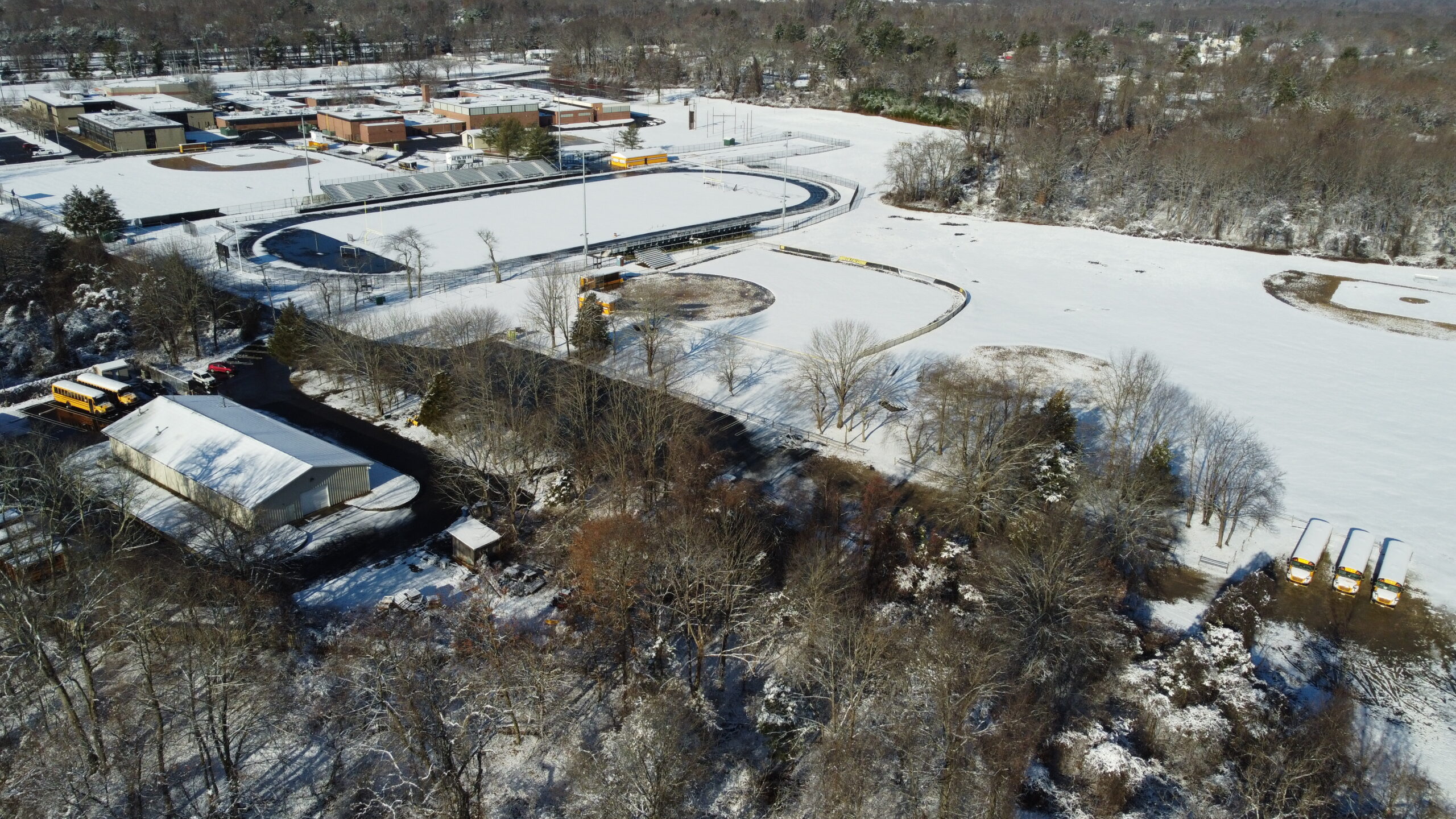
    What happened last Thursday? Snowy coatings south of the Cape May Canal with a gentle breeze out of the northeast.

    These three messages were like dozens of others. Messages, comments, and posts to me all circled around the same concept: the generic weather phone app. Using it is fine 75% of the time. However, just like calling a 1-800 number, when you really need an answer, you want a human to help you out.

    This doesn’t mean the nor’easter didn’t happen at all. Norfolk, Va. reported 11 inches of snow, Chincoteague Island, Va. off the Delmarva Peninsula reported 6.5 inches, and the Outer Banks of North Carolina reported 3 to 6 inches of snow according to the National Weather Service.
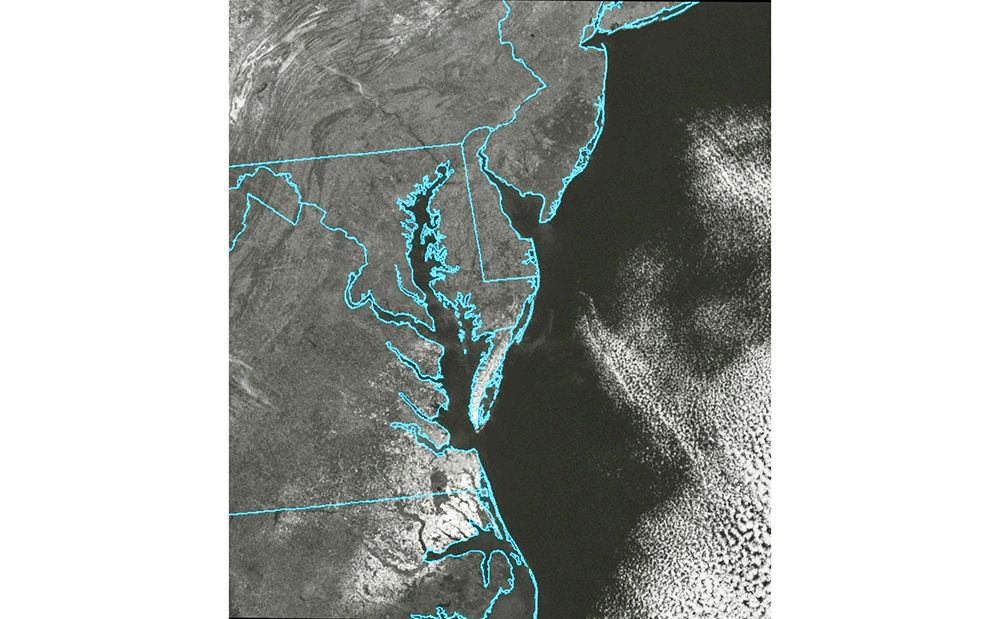
    Visible satellite over the Mid-Atlantic after the Feb. 19-20, 2025 nor’easter. Note the bright white in eastern Virginia and North Carolina. That is snow cover. New Jersey, meanwhile, had none (NOAA).

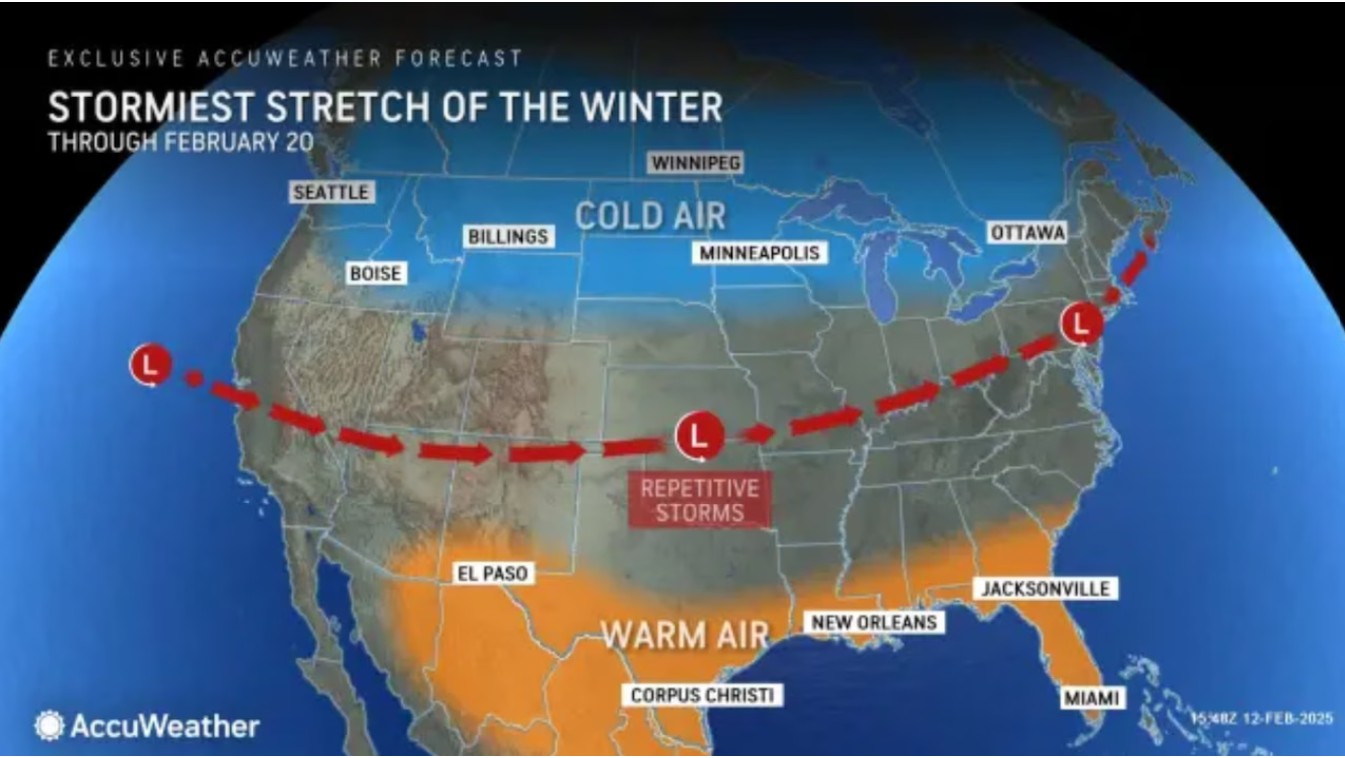
    I, and every credible meteorologist I know of in the area, did not start putting out snow forecasts until Monday. That’s about 60 hours before any storm was supposed to come. My forecast, even on Monday, was for a lower impact event. No foot-plus forecasts or historic nor’easter for New Jersey.

    Now this is not because we meteorologists hunkered down in a basement and all decided to withhold the snow forecast from you. It’s because we know how nor’easters work and the limitations of computer modeling.

    Think about this: Meteorologists have to be accurate because they work for the public or their bosses. Phone apps? Not so much. They’re made by companies to make money, not to help people. They just spit out computer guesses with no real risk. That’s why an app might say a foot of snow one day, then an inch the next, and then 6 inches after that.

    Meteorologists, like the ones who work for the government or news outlets, are usually seen as people you can trust.

    A long time ago, our job started because we wanted to keep people safe. When we say it’s going to snow, most folks believe us more than their phone apps. Our weather predictions help people get ready for big storms – like knowing when to leave their homes or stock up on supplies. Take Superstorm Sandy, for example. People listened to us to figure out what to do, not just some computer message.

    Generic phone apps are quick, easy and give you an answer. That’s what we all want in life. I want that in life, too. But as they say, life is not always black or white. It’s just not that easy.

    The reason I waited until Monday to issue a snow forecast was because of computer model limitations and an understanding of how the atmosphere works.

    Weather predictions past 84 hours use global models. These models cover the whole Earth, about 12,430 miles from pole to pole. The distance from Ocean City, NJ, to Norfolk, Va., is just 1.5% of that, so it’s tiny compared to the model.

    Therefore, on Feb. 13, 14, 15 and even 16, it was fair to say that a nor’easter would be around New Jersey on Feb. 20. However, it would have been impossible to pinpoint a snow forecast. Even if the generic weather app were right it would have been pure luck – like throwing a dart in the bullseye blindfolded.

    Secondly, the nor’easter didn’t enter the United States’ West Coast until Sunday night to early Monday. That plays a role. When it enters the country, it can be sampled by the National Weather Service’s twice-daily weather balloon launches for weather data. That data then feeds into the weather computer models.

    Third was that there was going to be plenty of dry air to the north. This was always going to bring a sharp cutoff in snowfall totals. It was why I thought our third “South Jersey Snow Special” was a good possibility on Monday, despite it not working out that way. But again, when the snow map first came out Monday, the highest snowfall forecast was 1.5 to 3 inches of snow for Atlantic and Cape May counties. Places like Medford and Trenton would see no accumulating snow.

    The reality is that 75% of the time, using your generic phone app is fine. If it’s dry, it won’t really matter to us if it’s sunny, or partly sunny, or if it’s 65 degrees or 68 degrees. I get that.

    However, when the specifics of the forecast really matter, that’s when a meteorologist comes in. I used to work at the weather consulting company WeatherWorks in Hackettstown. We worked with movie production companies. They needed accurate cloud cover forecasts. A phone app can’t do that. A meteorologist can.

    The same goes for snow, hurricanes and coastal flooding. It’s going to take longer to get an answer from us than the phone app, but it has a better chance of being the right answer, and giving you the context you need. That’s why many of us still check in with meteorologists daily, even if the next week will be mild and clear.

    Last week I had to call the Internal Revenue Service for something. After dialing the number, I pressed one automated prompt, then another automated prompt that I thought would help me out. It left me without the answer I needed and once the automated prompt ended, the call ended.

    After a few tries of different combinations, I reached a very pleasant man in West Virginia. I explained my problem and he helped me out right away.

    Human knowledge and context, aren’t going away soon.
  • South Jersey: The Unexpected Snow Capital of NJ

    South Jersey: The Unexpected Snow Capital of NJ

    Read the Feb. 20 article in Shore Local News here!

    NOTE: This article came out on Feb. 20 but was written on Feb. 14. As we know, there was no snowy nor’easter in New Jersey this week. That stayed in Virginia. This article is modified to adjust for that.

    With two South Jersey Snow Specials down and another one possibly on the way, our area could beat out the typically snowy, hilly northwest New Jersey for the snowiest place in the Garden State.

    As of this writing, we didn’t know what would happen with a nor’easter anticipated on Feb. 20, but it turns out it brought a record snow to southeastern Virginia. Meanwhile, only Cape May City saw coatings. There was no third South Jersey Snow Special.

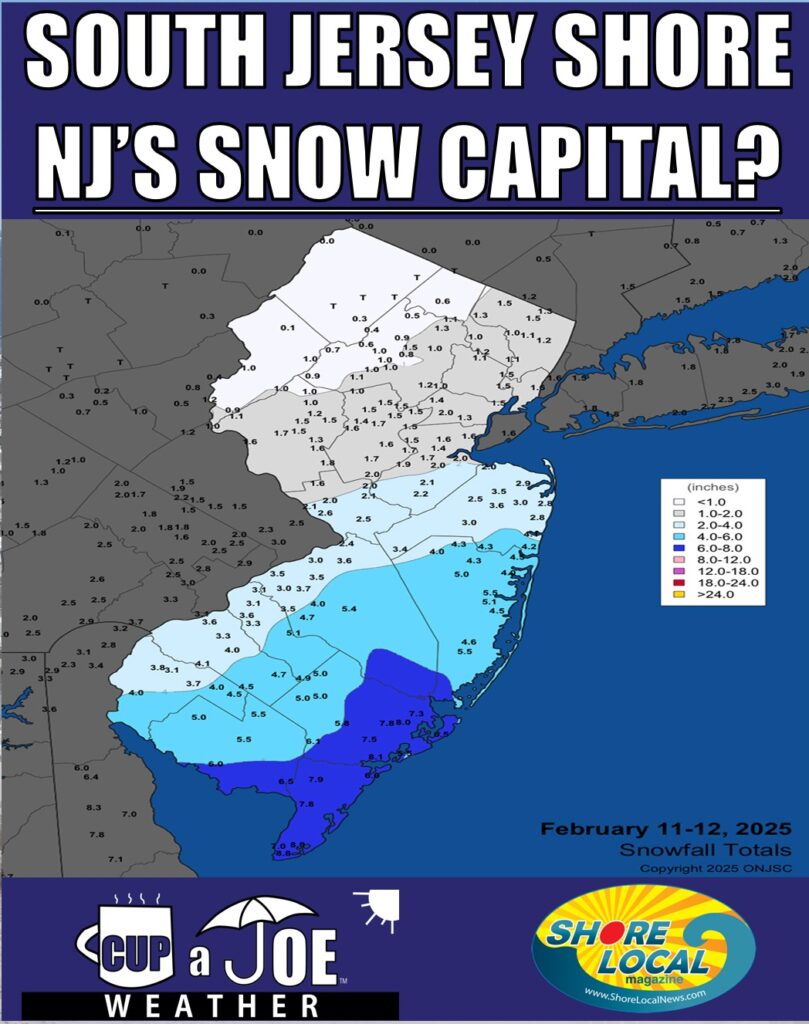
    However, Jan. 6 saw Wildwood Crest’s 8-inch report as the highest snowfall total in the state. 4 to 6 inches of snow fell in places like Ocean City, Somers Point and Margate, too. Meanwhile, once you went north of the White Horse Pike, snowfall totals were generally below 2 inches.

    Then, on Feb. 11-12, it happened again. In an all-snow event, Cape May was in the top spot with 8.8 inches of snow. However, more than 6 inches of snow fell in eastern Atlantic County, as well as all of Cape May County; 8.1 inches were measured by Dan Forshaw in Somers Point, a volunteer weather observer for the Community Collaborative Rain, Hail and Snow Network (CoCoRaHS). In Ocean County, 6 inches fell as reported by another CoCoRaHS spotter.

    It’s rare for the southeastern part of New Jersey to get more snow than the usually snowier and colder northern areas of the state.

    Since the winter of 1939-1940, there have been eight times when either the Cape May area or Atlantic City International Airport got more snow than other major weather stations in New Jersey. These other stations are: Trenton, New Brunswick, Newark, and Belvidere. This information comes from the National Oceanic and Atmospheric Administration, or NOAA.

    Here’s a look at those winters, along with the location of the snowiest place and how much snow they received. All data are measured in inches.

    1939-1940: Cape May area, 28.1.

    1967-1968: AC Airport, 18.5.

    1978-1979: AC Airport, 43.1.

    1988-1989: Cape May (Lower Twp.), 21.2.

    1989-1990: AC Airport, 23.0.

    2009-2010: AC Airport, 58.1.

    2021-2022: AC Airport, 33.3.

    2024-2025 (thru Feb. 15); AC Airport, 13.8.

    If it happened before, then this winter has the possibility of doing it again.

    There are specific reasons why each winter had more snow here than the rest of the state. They can be grouped into a few categories.

    This winter, just like in 2009-2010 and 1988-1989, the storms that make snow are coming from so far south that our area is getting the most of the snow in New Jersey. When you go north, you get too far from where the storms are so places like Belvidere or Newark didn’t get much snow because it was too dry there.

    The winter of 2021-2022 had that as well. A storm on Jan. 3, 2022 brought over 8 inches of snow to the South Jersey shore. Meanwhile, north of Interstate 195, there was no measurable snow.

    However, later in the month, the Blizzard of 2022 happened on Jan. 28-29. The storm track was so far east that the Jersey Shore saw the most precipitation. Twelve to 20 inches of snow fell here, but Atlantic City International Airport only picked up 16 inches of snow. Meanwhile, Trenton and Belvidere saw less than half of that.

    Some were just luck. The winters of 1967-1968, 1978-1979, and 1989-1990 all saw about the same amount of snow throughout the state. However, Atlantic City International Airport or the Cape May area saw just a little more than the others.

    We need to wait and see how much snow we get from the anticipated Feb. 20 nor’easter. I think it’s possible for the South Jersey shore to get more snow than other parts of New Jersey this winter. However, we’ll need one more South Jersey Snow Special to do so.

    Temperatures are expected to be colder than average for our area from Feb. 22 through the middle of March, according to NOAA’s Climate Prediction Center. While that doesn’t guarantee snow, that’s a help.

    On the other hand, the forecasts for the upper-level weather pattern suggest that winter storms will take a more northerly track. It could be that when it’s cold enough for snow, it’s dry, or when a storm arrives, it warms up. That would mean less snow here compared to climatologically snowier spots farther north in the state.

    Plus, as we deal with every year, our snow season is just shorter. Our average last measurable snow in Lower Township is March 2, according to NOAA. At Atlantic City International Airport the average is March 6. Trenton, Newark and Belvidere’s are all at least 12 days later. That gives these locations a longer runway to make up their snow deficit.

    Ultimately, we are progressing well to once again create history in this region of the Garden State, but assistance will be required to achieve this goal.

    If you have a small open space on your property and like weather, please consider joining CoCoRaHS. See https://www.cocorahs.org/application.aspx

    Joe Martucci, a Certified Broadcast Meteorologist and Digital Meteorologist, is the President and Director of Meteorology for Cup A Joe Weather and Drone. You can connect with him at cupajoe.sparkable.opalstacked.com/.

  • NJ Storms February 2025: Expert Analysis and Commentary

    NJ Storms February 2025: Expert Analysis and Commentary

    I was an expert for NJ.com’s article about how stormy February 2025 has been in the first half of the month. Fellow Certified Digital Meteorologist Steve DiMartino was included as well. Click here for the full article!

  • New Jersey’s Dry January: Drought Impact Explained

    New Jersey’s Dry January: Drought Impact Explained

    By Meteorologist Joe Martucci

    Dry January, the annual ritual in which people refrain from drinking alcohol to kick off the new year, extended to Mother Nature as well. However, in her case, the dry January wasn’t about a lack of alcohol, but a lack of precipitation, significantly lowering the chances that we will end the drought by the time spring comes.

    Dry on the coast

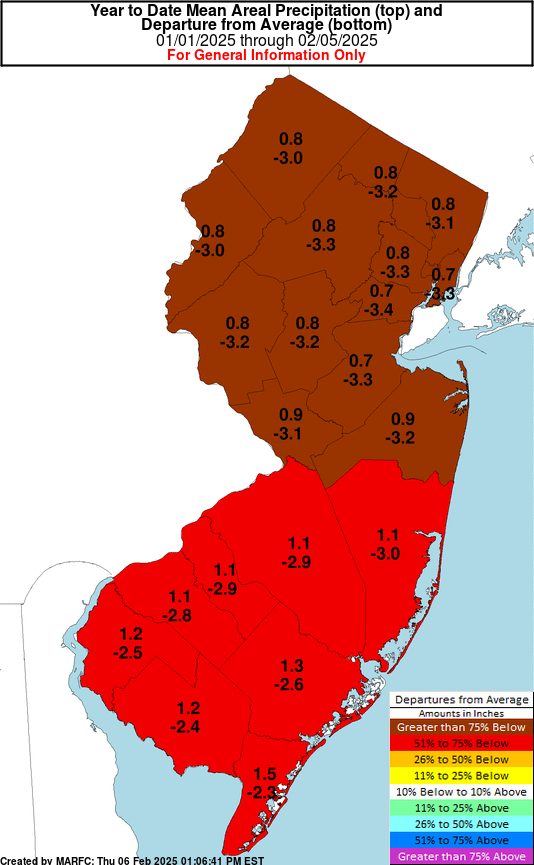
    New Jersey’s Precipitation Departure from Jan. 1 to Feb. 6 (NOAA)

    The Coastal Region of New Jersey, roughly anywhere from the Garden State Parkway on east, including most of Cape May County, had the third or fourth driest January on record, according to the Office of the New Jersey State Climatologist.

    Records going back to 1895 show it was among the driest 2-3% of Januarys on record, according to Dave Robinson, the New Jersey state climatologist.

    Snow not enough

    Don’t be fooled by the snow cover on the ground, the cold weather and lack of watering you did in January. This is bad news for New Jersey.

    Every week, January saw either an improvement or no change in its drought status, which is updated by the United States Drought Monitor on Thursdays using data through that Tuesday. That is, on Jan. 30, 15% of the state worsened from a “moderate” drought – a level one of four for drought – to a “severe” drought, a level two.

    The South Jersey shore remained in the driest condition, located in an “extreme” drought at level three of four. More than a third of the state, 34%, is in this classification, which includes all of Cape May and Atlantic counties, as well as most of Cumberland, Burlington and Ocean counties. Our region has remained in this extreme drought from Nov. 12 through the Jan. 30 update.

    While our Feb. 5 status is not known at the time of this writing, there’s no reason to believe our drought status will be better by then. We need around 0.75 inches of rain a week just to stay steady, and more to improve our status. We’re not expected to go much above 0.75 inches by the Thursday update.

    I’ve been saying since our winter forecast was released on Nov. 27 that we won’t have enough precipitation to cure drought by the time the winter season is over. Sadly, that’s proving true.

    Spring is coming

    We have about six more weeks to improve drought fairly easily. Water usage is at an annual minimum and the sun isn’t evaporating much moisture from the ground.

    But six weeks from now it will be late March. Water usage will increase as agriculture begins and sprinkler systems come back online. The sun will be stronger and pull moisture out of the ground through evaporation. By this point, we’ll need about an inch of precipitation a week just to keep our drought status steady, and probably 1.5 inches a week to improve drought. That’s a tall order.

    The Climate Prediction Center forecasts equal chances of precipitation being either below average, near average or above average for February from their mid-January update. Those equal chances extend to their three-month outlook, which covers February through April.

    Sure, it’s possible we wind up on the wet side, but don’t place your bets on it. Even average precipitation during this time will bring harm to the state, let alone below average.

    Forest fire danger

    Prescribed burning will be a challenge to meet the New Jersey Forest Fire Service’s mission to protect “life, property as well as the state’s natural resources from wildfire.” Prescribed burning reduces the risk of future wildfires by skillfully applying fire to reduce the underbrush, which is fire fuel. Typically, this begins in late February and continues through spring.

    Most of the Pine Barrens range from a level five to a level nine out of 10 when it comes to burn probability, as of Jan. 31. I expect that to worsen in the next few weeks.

    If conditions are too dry, it’s hard to conduct prescribed burning, and even skillfully applied fires can spread rapidly. Reduced prescribed burning just means a greater likelihood the inevitable wildfires that do occur this year will be bigger and spread faster.

    Dry streams and wells

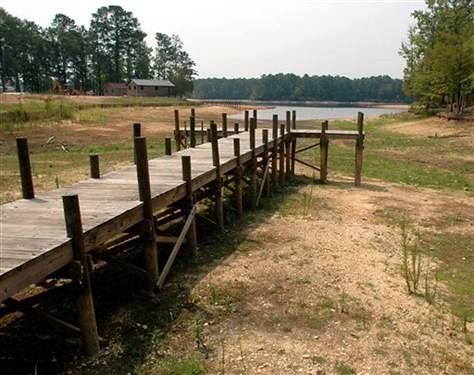
    Many of us have well water once you go offshore. With groundwater conditions running “extremely dry,” according to the New Jersey Department of Environmental Protection (NJDEP), expect this to mean either your well will need to be dug deeper, or risk going dry completely and relying on outside sources of water.

    Streamflows have also been suffering under the extremely dry conditions for the past 14 weeks, the NJDEP says. That will impact the amount of oxygen fish and other freshwater marine wildfire can consume. Expect impacts there.

    Water restrictions

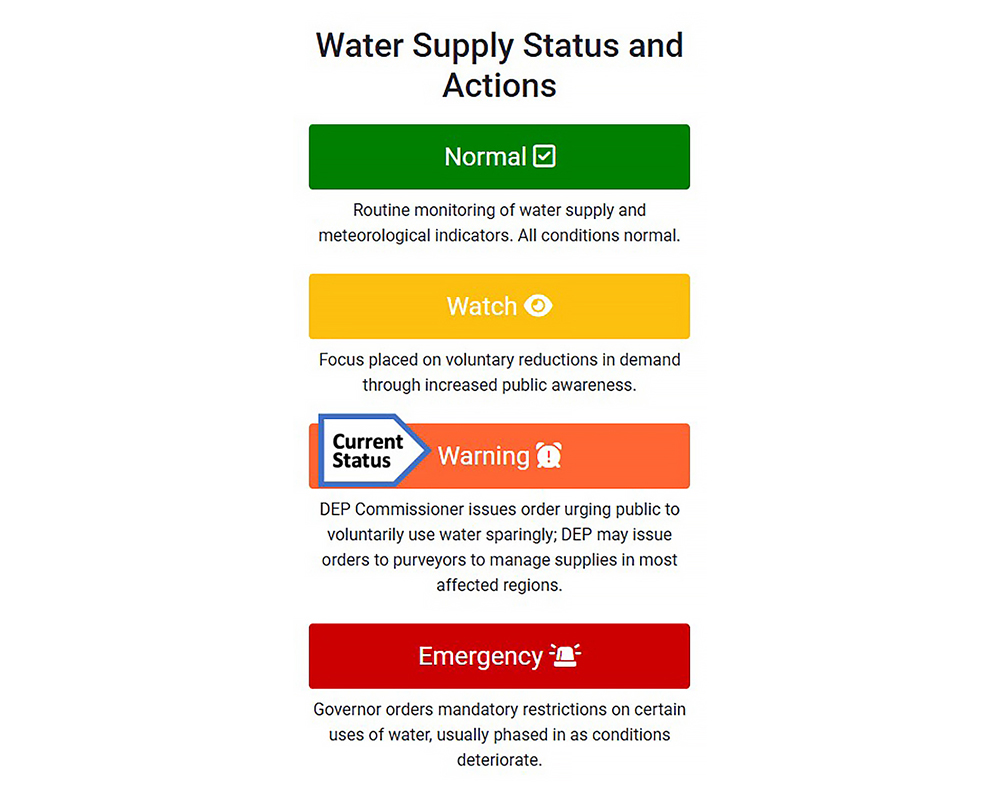
    Via the New Jersey Department of Environmental Protection

    This one is a policy decision. I’m not a policymaker, nor do I know everything that goes into the decision. However, currently the state is in a drought warning. The next step would be a drought emergency. The last time that occurred was from March of 2002 until January of 2003, according to the state.

    The current drought is as significant and severe as it was then, so it’s very possible that we will go into an emergency this spring if drought conditions don’t improve. We already have volunteer water restrictions in effect by New Jersey American Water. A drought emergency doesn’t have to mean water restrictions statewide, but in the 2002-2003 emergency it did.

    On June 20, 2002, the state issued mandatory restrictions. They halted commercial power washers, of flushing sewer systems, and mandated odd/even days for watering lawns. Restaurants were told not to serve water unless requested by customers.

    I can’t say for sure, but I bet that kind of restriction will take place if precipitation winds up at or below average over the next three months.

  • Ice is at the Jersey Shore. Here’s how to enjoy safely.

    Ice is at the Jersey Shore. Here’s how to enjoy safely.

    Read it on Shore Local News here!

    By Meteorologist Joe Martucci

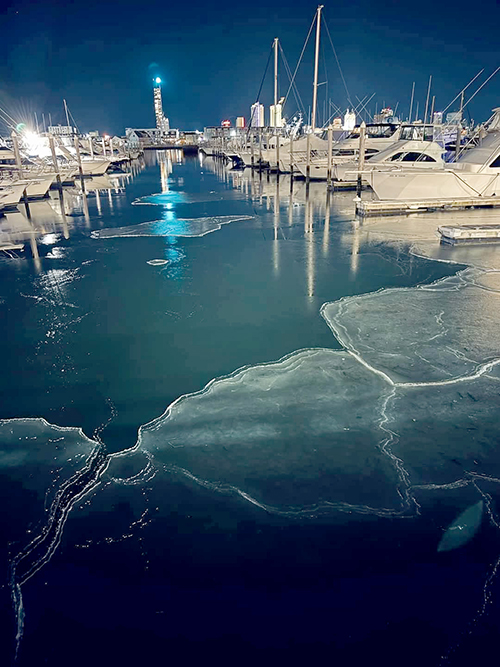
    The Jersey Shore has had more ice the past two weeks than at any point since December 2017 – January 2018. More seasonable temperatures this week melted some of that, but a full thaw won’t come soon. That gives us opportunities to enjoy the ice, as long as we keep some important safety tips in mind.

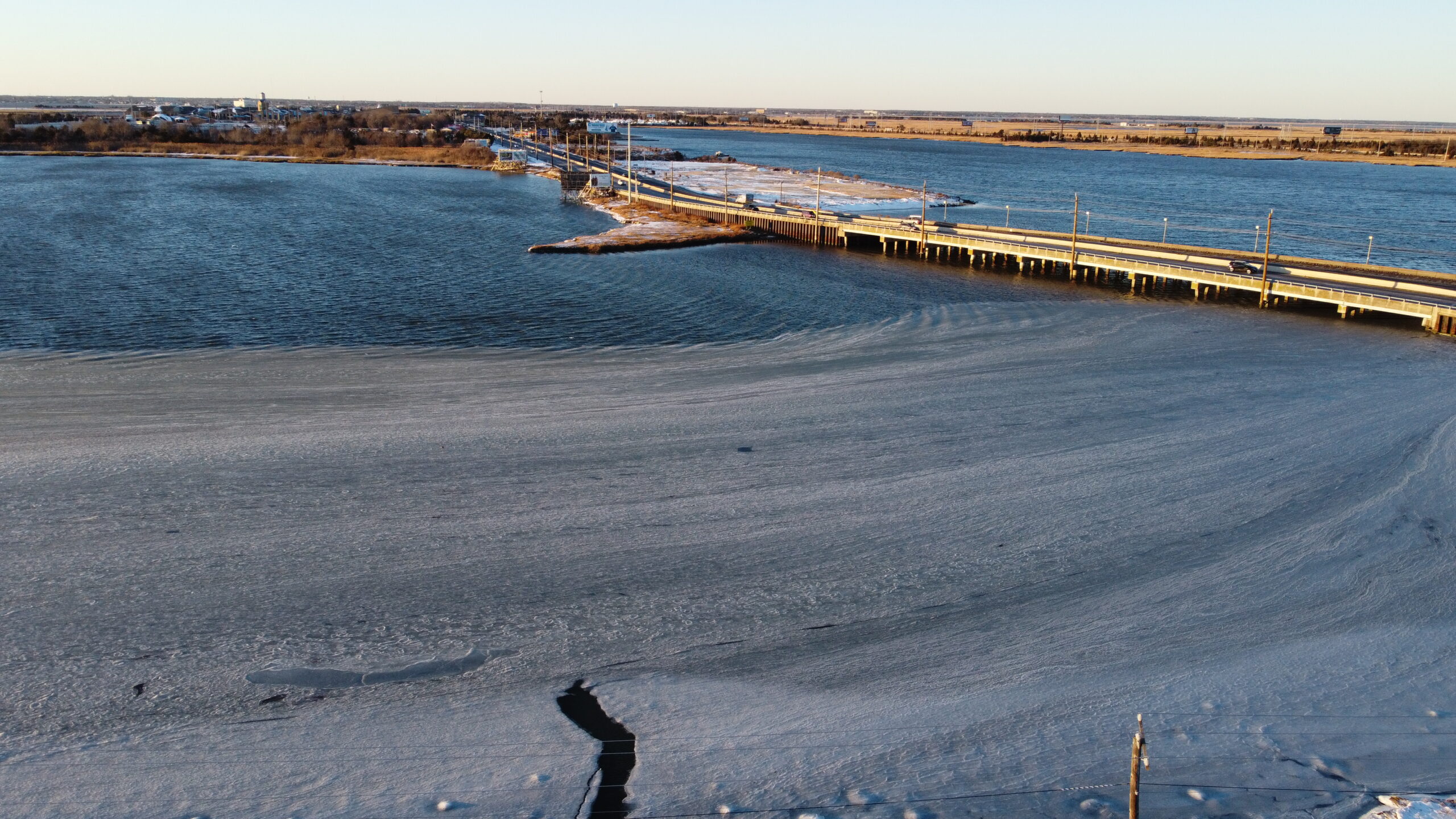
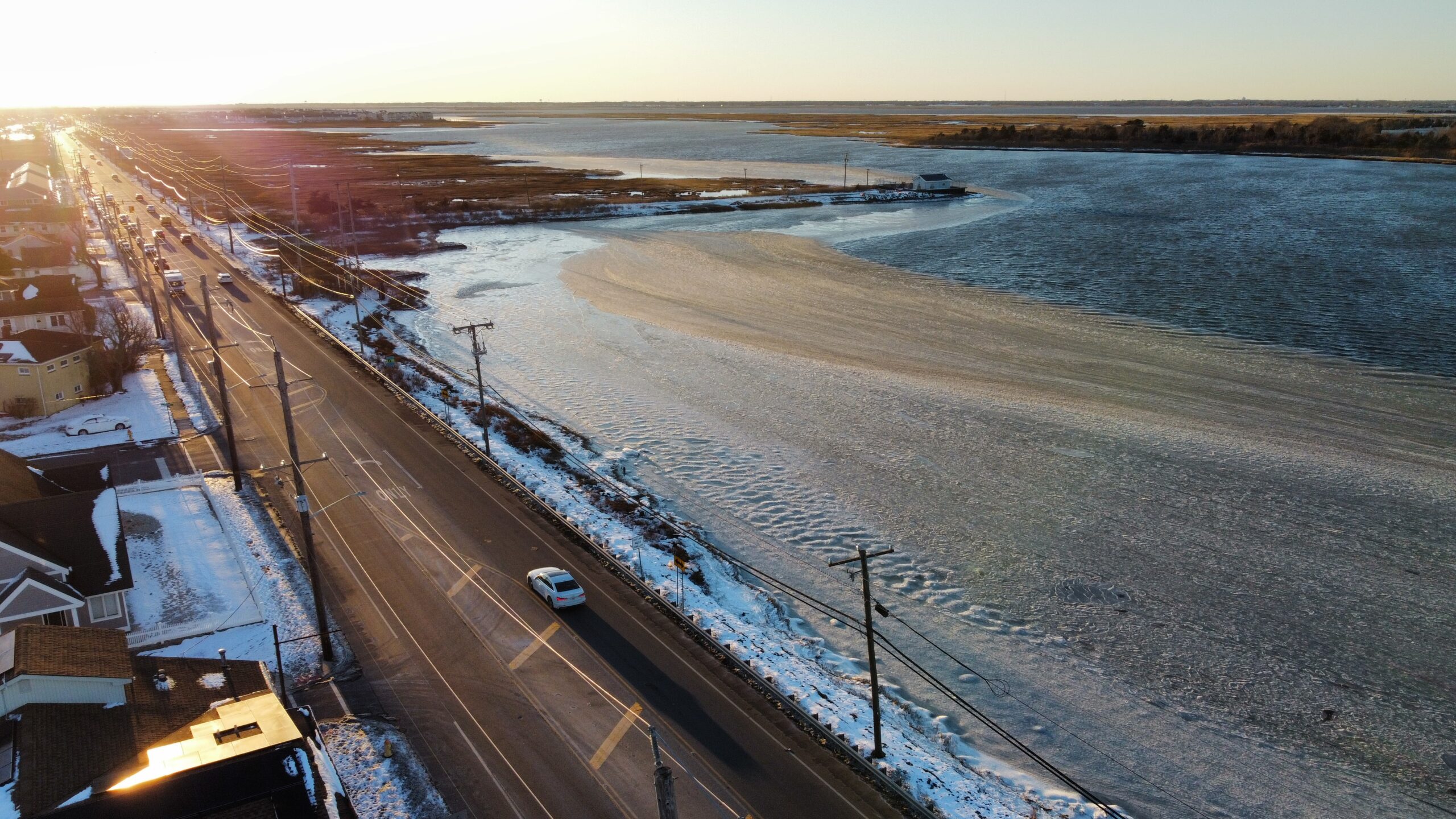
    Once Jan. 4 came, most of our days were spent below freezing. Ice first developed on the freshwater ponds in the first week of January. By Jan. 9, ice had formed on the edges of the saltwater back bays. I captured drone footage of ice on Beach Thorofare in Atlantic City, right off West End Avenue.

    That stayed more or less the same for a while. However, the arctic outbreak last week, caused by the polar vortex, expanded the ice deeper into the back bays. Big bays like the Barnegat and the Delaware, formed ice on them as well.

    Ice provides our cold, barren, Jersey Shore winter with opportunities for outdoor activities. Pond hockey, ice fishing, even just walking on the ice far away from the beaches, give us unique opportunities to enjoy our beautiful environment in a different way. However, especially in salt and tidal water, safety is paramount.

    The first step, before setting foot on the ice, is to check with your local police or fire department about ice conditions. Call their non-emergency phone number. They may even post about it on their website or social media as well.

    Photo credit: Whateveraclife Gaming

    As part of the ice report, they should list how thick the ice is. That’s important. What you can do out on the ice is determined by how thick the ice is.

    Put simply, anything below 4 inches of ice is too thin to be out on. Even your own body weight is too heavy to be supported on that ice.

    For walking, ice fishing or ice skating, ice at least 4 inches thick is mandatory, according to the Minnesota Department of Natural Resources, although if you and three friends are sitting close together ice fishing, that 4-inch ice thickness guidance is not enough, either.

    If you’re itching to take your all-terrain vehicle from the dirt roads to the ice roads, you’ll need at least 7 inches of ice to do it safely. You would struggle to find ice that thick around here. Just for reference, if you want to take a car out, you need at least 9 inches of ice.

    That’s only on new, clear ice. If snow melts then freezes on the ice to create what is called white ice, then the ice is half as strong, which means the recommended thickness should be doubled.

    For rivers, streams and especially bays, the moving water creates uneven ice. But there are ways to even out the area you’re going to utilize on the ice.

    When I used to play hockey on the Rahway River in Union County growing up, we had a pump that would throw water on the ice the day before to smooth over the bumps for the next day’s use. You don’t want to catch an edge and send yourself down to the surface.

    If you must measure the ice yourself, you’ll want an ice auger. That’s a tool with a circular, swirling shaft which, depending on the design, can be used manually or mounted to a drill to easily cut through ice. Make sure you’re standing straight up and then drill straight down. Lift it up once you cut through the ice. Then, with a tape measure, determine the thickness.

    There’s plenty of safety factors to take into consideration, but once you’re out on the ice, there’s almost nothing like it. Breathing in the icy, dry air can be invigorating. And, for a region that is tied to the water, being able to enjoy it when beach season seems far, far away is a joy.

  • Snow and bitter cold grip the Jersey Shore in January

    Snow and bitter cold grip the Jersey Shore in January

    Read it on Shore Local News here also!

    A little snow this past Sunday kicked off a week’s worth of well-below-average temperatures, which we will only get out of this Sunday.

    A coastal storm impacted the Mid-Atlantic on Sunday. This wasn’t a strong coastal storm. There was no coastal flooding, and the winds weren’t all that strong.

    However, it was still a low-pressure system that moved from the Deep South around Virginia Beach, and then just off the Nantucket coast.

    Snowfall totals at the South Jersey Shore were light. Just 0.3 inches fell in Somers Point, and a trace was reported in Ocean City.

    It snowed for several hours Sunday. However, temperatures were above freezing most of the time, which meant much of that snow melted on contact with the ground instead of accumulating.

    Other parts of the state picked up more snow. Western Atlantic County saw 1 to 2 inches, and Northern Ocean County saw about that as well with northwest New Jersey seeing 4 to 8 inches.

    I mentioned in my forecast that what happens after the storm would be more impactful than what happens during it, and surely came true.

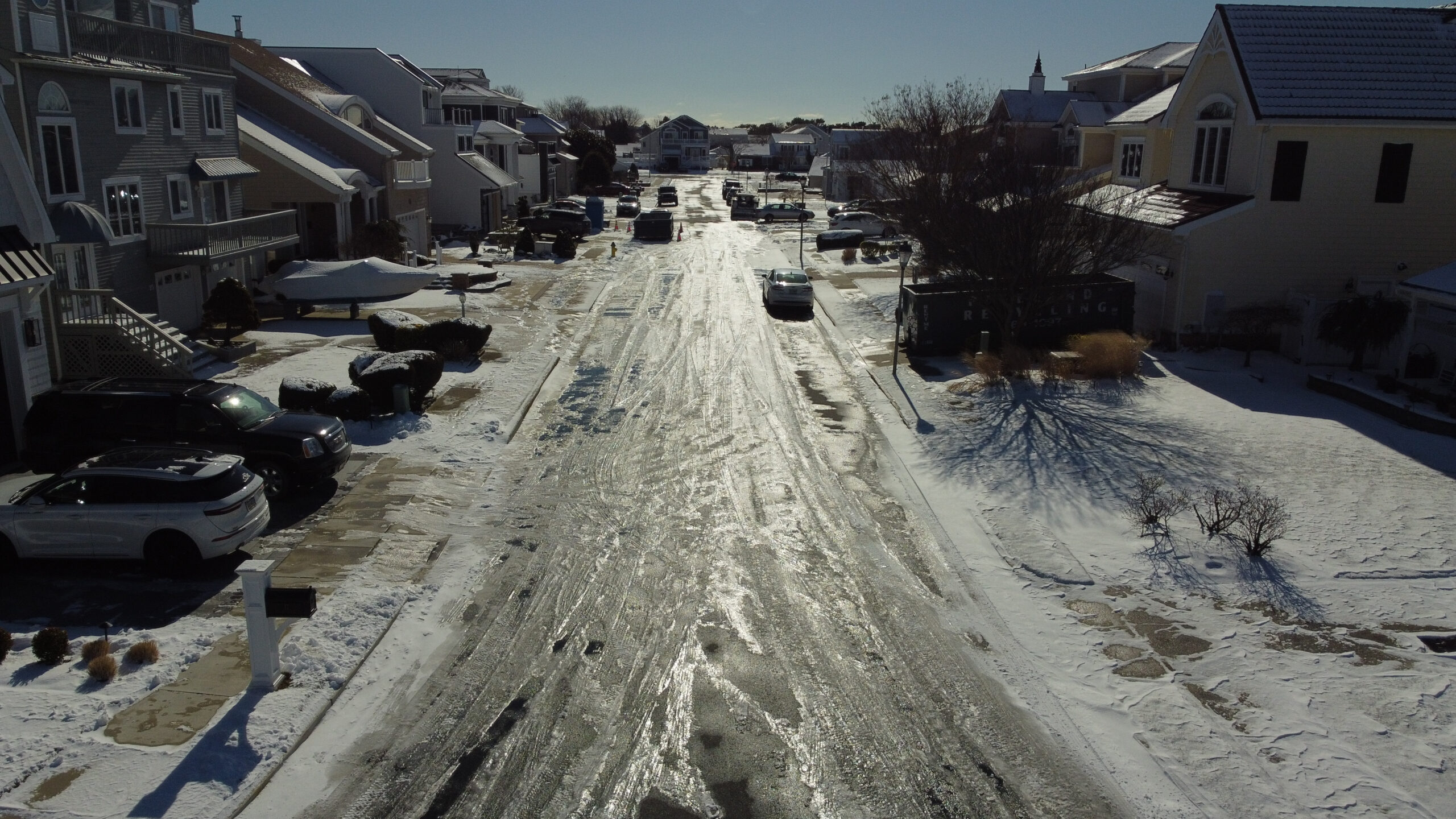
    Temperatures crashed into the 20s, turning wet pavements and sidewalks into sheets of ice. That ice still hasn’t melted in spots as temperatures stayed below freezing Monday, Tuesday and Wednesday. At the time of this writing, it looks like temperatures were not going to go above freezing until Friday inland, perhaps just peaking at 33 degrees in the beach towns Thursday.

    Either way, it’s been frigid. Atlantic City International Airport had a high temperature of 29 degrees Monday. On Tuesday, both ACY Airport and Sen. Frank S. Farley State Marina reached just 20 degrees for the high.

    Tuesday was the coldest day since Dec. 24, 2022. It was 21-23 degrees below average – as cold as a typical Jan. 21 day in Caribou, Maine, in the far northern reaches of our northernmost state.

    Morning lows were very cold as well. However, without a snowpack to accelerate the cooling at night, it hasn’t been exceptional. Lows generally remained 7-12 degrees inland, and 10-15 degrees at the shore.

    This polar plunge was the result of the polar vortex. About two weeks ago, the polar vortex in the stratosphere, which is 8 to 31 miles above the surface, entered the Northeast, causing the jet stream in the troposphere, which is about 20,000 to 30,000 feet high, to become very wavy, moving in a more south-to-north fashion. The jet stream is the river of air that separates two air masses. In this case, it was mild air to the south and true polar air to the north.

    Once Sunday’s storm passed, that jet stream dipped down into the Gulf Coast. Since we’re far north of that, we had a near uninterrupted path to the polar air.

    Now as cold as it’s been, we didn’t break any cold temperature records. At the Atlantic City Marina, we needed to have highs in the 10s, with lows in the lower single digits. At Atlantic City International Airport, the lows needed to be below zero.

    Getting below zero is tough and getting tougher. The last time the airport was below zero was Jan. 7, 2018, according to the National Oceanic and Atmospheric Administration. It’s been three years since we last set a minimum daily temperature record. However, we’ve set roughly two dozen maximum temperature records since.

    The bitter cold will end this weekend. Temperatures will rise to seasonable levels Sunday, with highs in the 40s. It will feel like New Orleans compared to where we’ve been. However, maybe I’m speaking too soon, since that city just saw its biggest snowfall in recorded history on Tuesday.

  • New Jersey Coastal Coalition on NBC10 Philadelphia

    New Jersey Coastal Coalition on NBC10 Philadelphia

    I work as the Public Outreach Coordinator for the New Jersey Coastal Coalition as part of Cup A Joe Weather and Drone.

    On Thursday, we held a press conference. It took place during our monthly meeting in Longport. We recognized the launch of our new Emergency Weather Web App 4.0. This is flooding specific and gives information on high ground to park your cars, forecast flood times and more.

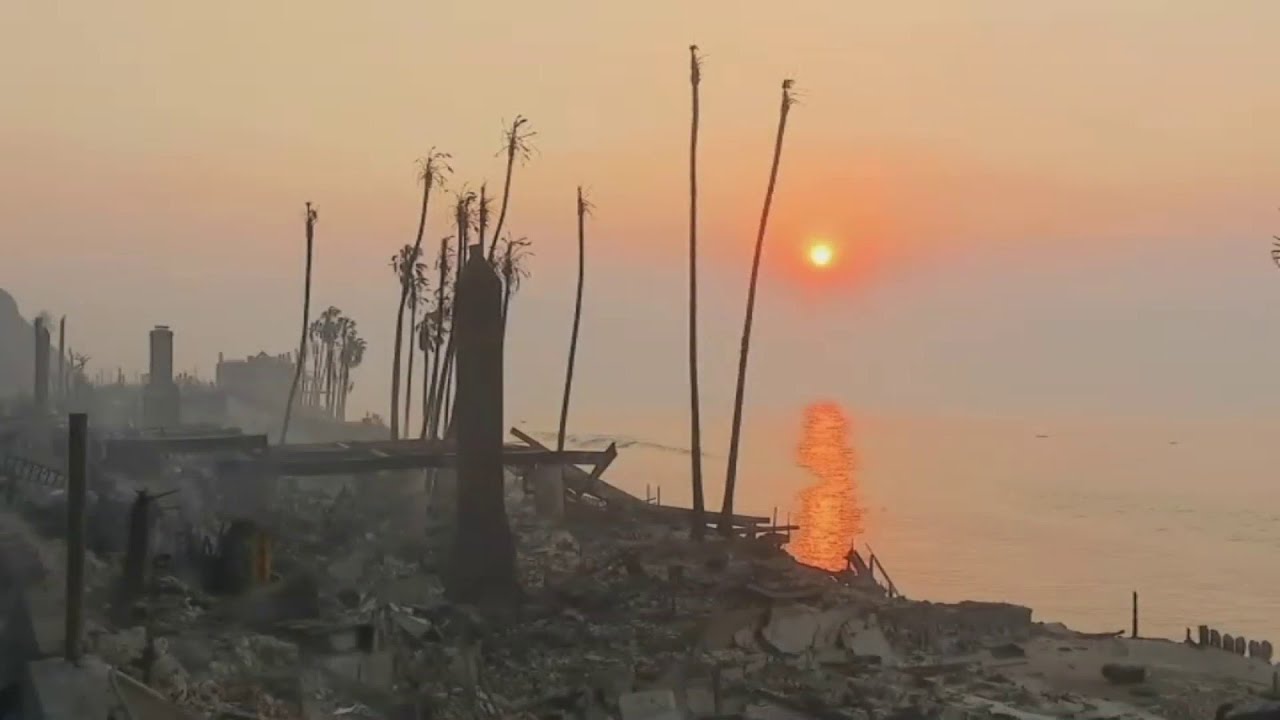
    Ted Greenberg covered this natural disaster mitigate technology as part of a broader story on the California wildfires. Thanks for interviewing me, and covering it.

  • How climate change has and will impact landfalling hurricanes

    How climate change has and will impact landfalling hurricanes

    Read this on Shore Local News here

    I flipped through the Bulletin of the American Meteorological Society (BAMS) last week. It’s our big trade magazine. Among announcements of future conferences and photos of research meteorologists out in nature, was a journal article titled, “Tropical Cyclones and Climate Change.” Given that we live in a hurricane-prone area, I read it.

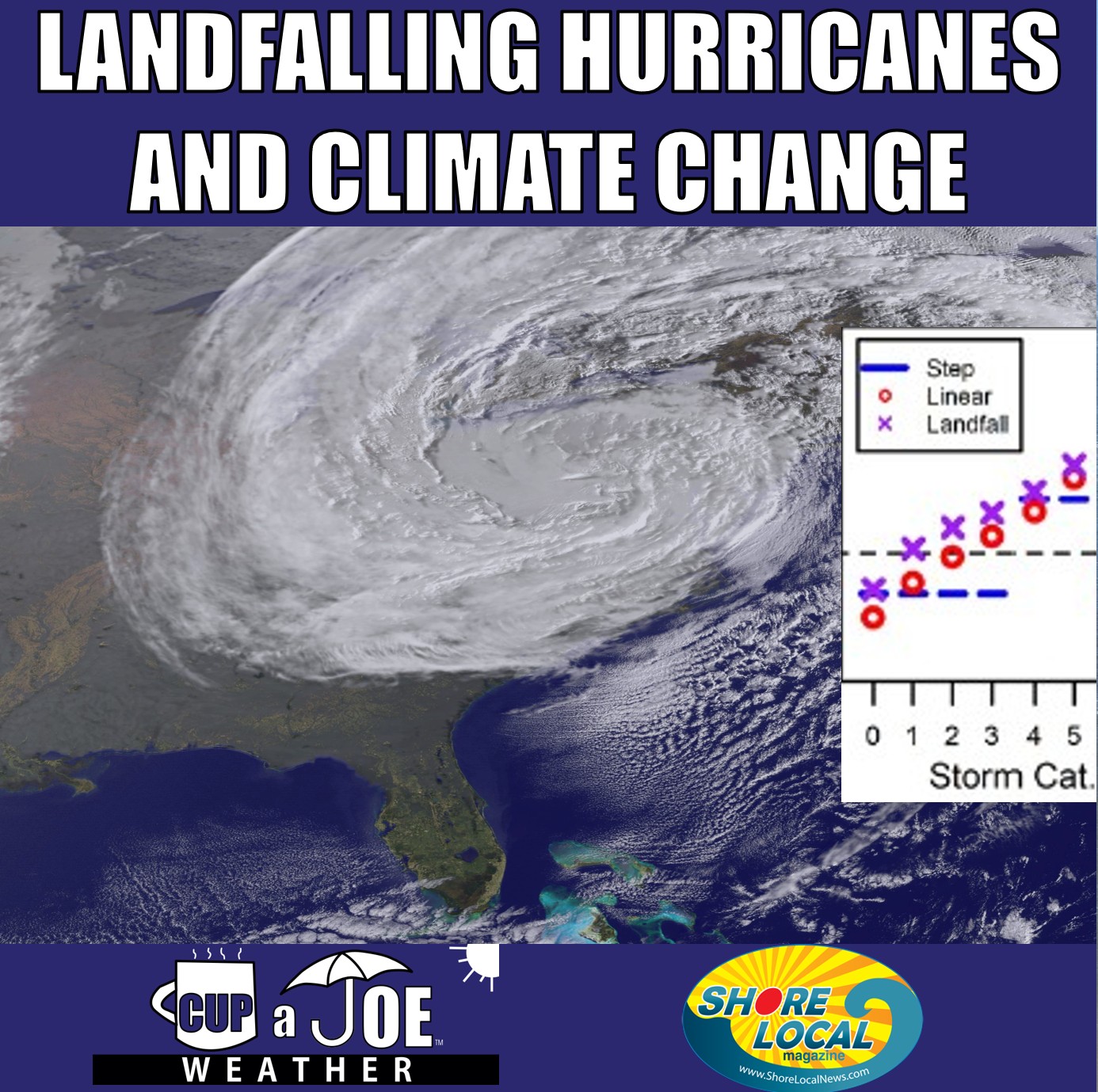
    Author of the paper Stephen Jewson, from Lambda Climate Research in London, shows that landfalling hurricanes have and will be impacted by climate change differently than hurricanes in general.

    “The commonly heard phrase, ‘hurricanes are projected to be less frequent, but more intense,’ is somewhat unhelpful,” Jewson writes.

    As the Earth gets a little warmer, about 2 degrees Celsius hotter than it is now, Jewson says the frequency of landfalling hurricanes increases. Specifically, we see a 25 percent increase in the biggest, scariest hurricanes – the ones called Category 5. On the other hand, the smaller, less intense tropical storms, which have winds from 39 to 74 mph, would not happen as often.

    This is important because it’s not just any study about climate change and hurricanes. Jewson looked at the storms that affect us directly; the ones that hit land. It’s also worth noting that the Earth has already warmed up by about 1.62 degrees Celsius from 1917 to 2023, according to the National Oceanic and Atmospheric Administration. These changes are already happening.

    “For instance, there are previously published results that suggest the frequency of hurricanes may decrease. After conversion to landfall, however, the same results suggest that the frequency of hurricanes may increase,” Jewson says.

    Even though New Jersey hasn’t technically had a landfalling hurricane since the Vagabond hurricane of 1903, Superstorm Sandy, which lost its hurricane status just before making landfall, is still fresh in many people’s minds. Tropical Storm Fay was also at sub hurricane status when it made landfall near Brigantine in 2020.

    Here is a rough breakdown of how much more or less likely tropical storms and hurricanes would be on the North American East Coast, which includes us, with a 2 degree increase in temperatures.

    Tropical Storms:

    20 percent less frequent

    Category 1 Hurricanes:

    No change

    Category 2 Hurricanes:

    10 percent more frequent

    Category 3 Hurricanes:

    15 percent more frequent

    Category 4 Hurricanes:

    20 percent more frequent

    Category 5 Hurricanes:

    25 percent more frequent

    This is just my professional opinion, but these changes actually are more good than bad for New Jersey. There’s a 1 percent chance of a Category 3, 4 or 5 hurricane making landfall, or being within 50 miles of landfalling in any given year, according to Colorado State University.

    Even a 25 percent increase on top of that still means it’s very unlikely we’re getting hit by a storm of that magnitude. For context, our last landfalling hurricane that strong was Sept. 3, 1821, says David Ludlum, who founded WeatherWise magazine.

    Tropical storms are more of what we see, with a 23 percent annual occurrence, according to Colorado State. So a decrease there would be welcomed. Remember, too, that Colorado State University considers decades of data, so the latest Jewson research is already partially baked into what the university’s data says.

    You always have to be ready for trouble from the ocean. Jim Eberwine, retired National Weather Service meteorologist and current Absecon emergency manager, says we’re in a year-round hurricane season. After hurricane season ends on Nov. 30, we get into nor’easter season. That’s when we can still get big waves and flooding, just like with hurricanes.

  • The 8 ways it snows at the Jersey Shore

    The 8 ways it snows at the Jersey Shore

    By Meteorologist Joe Martucci

    With the cold, many of us think snow. In the beach towns, we average around 15 inches of snow in a winter. Meanwhile, inland areas in Atlantic and Cape May counties typically see between 16 and 20 inches of snow in a winter.

    By my count there are eight ways that it can snow in our area. Not all of them will bring a complete, start-to-finish snow. After all, we know how it is at the shore. There’s usually some rain, sleet or freezing rain mixing in. However, let’s take a look at each of them, grouping it by how often it typically happens.

    Nearly every winter:

    “Miller” storms

    This is a type of nor’easter winter storm defined by the direction the winds usually blow from. The name comes from J.E. Miller, the researcher who came up with this naming system for East Coast storms in 1946.

    They can happen any time of the year, bringing rain, wind and coastal flooding. However, it’s during the winter when they’re most frequent, and most apt to bring snow, sleet and freezing rain.

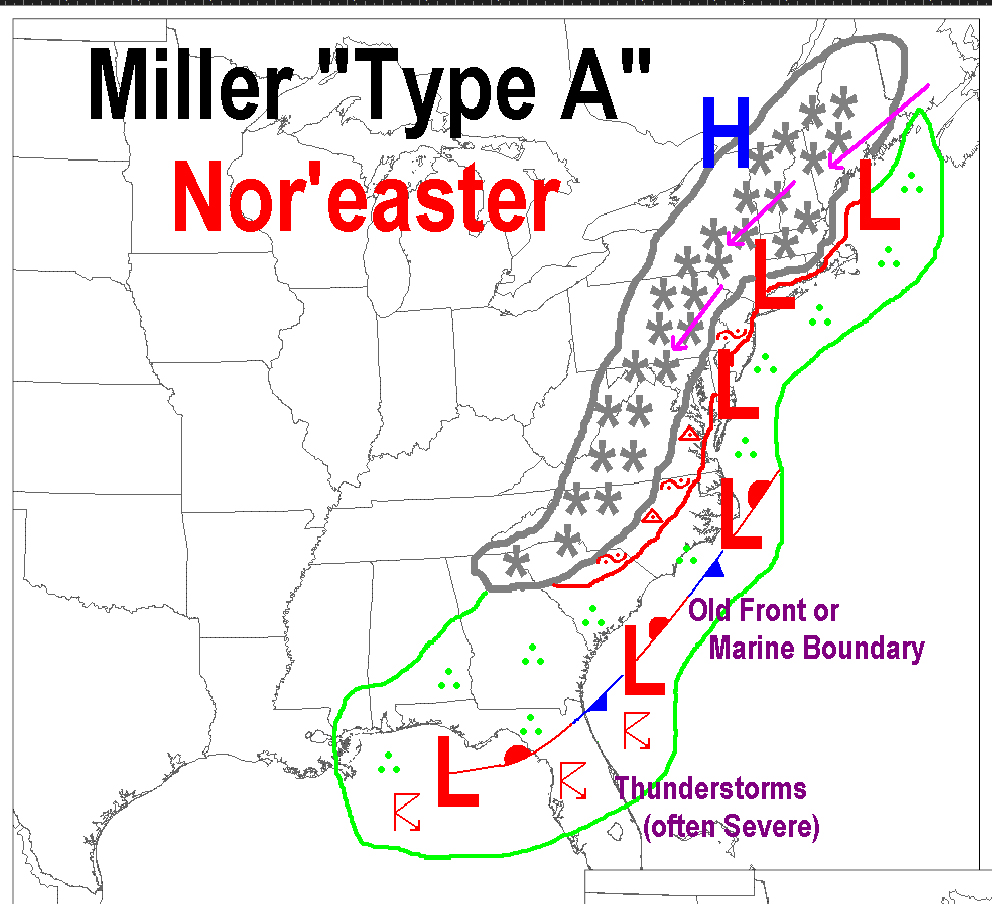
    Whether it’s a Miller A or Miller B depends on where the low-pressure system originates.

    In a Miller A storm, the low-pressure system develops in the Deep South, or the Gulf of Mexico. It strengthens as it moves up the East Coast. Then it will usually make a sharper turn to the northeast in the Mid-Atlantic or the Northeast. The Boxing Day blizzard of 2010 is an example of a Miller A storm when 10 to 20 inches of snow fell along the Jersey Shore.

    Meanwhile, Miller B storms are a little more common. Miller B storms start as low-pressure systems moving east from the Great Plains and Midwest. The system then weakens as it hits the Appalachian Mountains. However, it transfers its energy offshore. Typically, this can happen between North Carolina and Long Island. It will then move to the northeast, strengthening as it does so.

    Miller B storms are typically a little weaker than Miller A storms, since the ocean runway that intensifies storms is shorter than the Gulf of Mexico or Southeast forming Miller A systems.

    However, they are still our best shot of plowable snows, with sleet, freezing rain and coastal flooding. In fact, the snow on Jan. 6 was a Miller B storm.

    Alberta Clipper

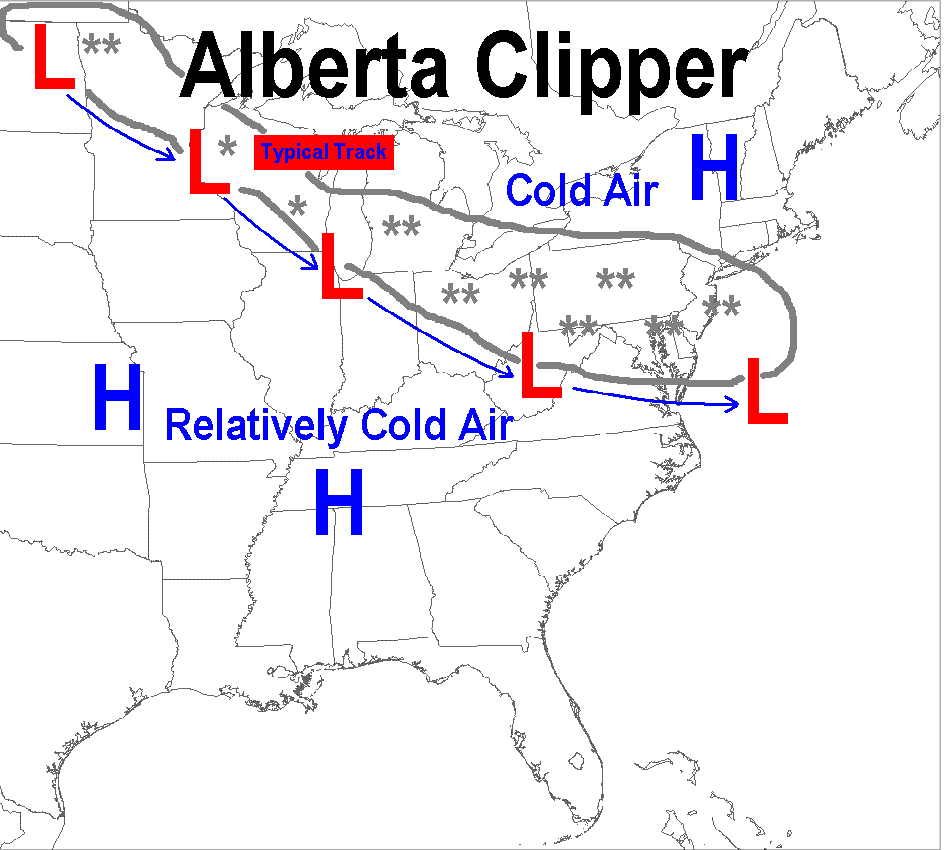
    Alberta Clippers are low-pressure systems that are cold and fast-moving. They’re named after where they originate, in the Prairies of Alberta, Canada. After forming, they typically arrive in New Jersey in two or three days.

    The low-pressure systems are fairly weak. Therefore, when we receive snow from these, it’s either light (under a half inch per hour) or moderate (a half inch to an inch per hour). Gusty winds come with this, too. However, they’ll be from the south, turning to the northwest with time. Alberta clippers happen numerous times a winter in New Jersey.

    Snow Squalls

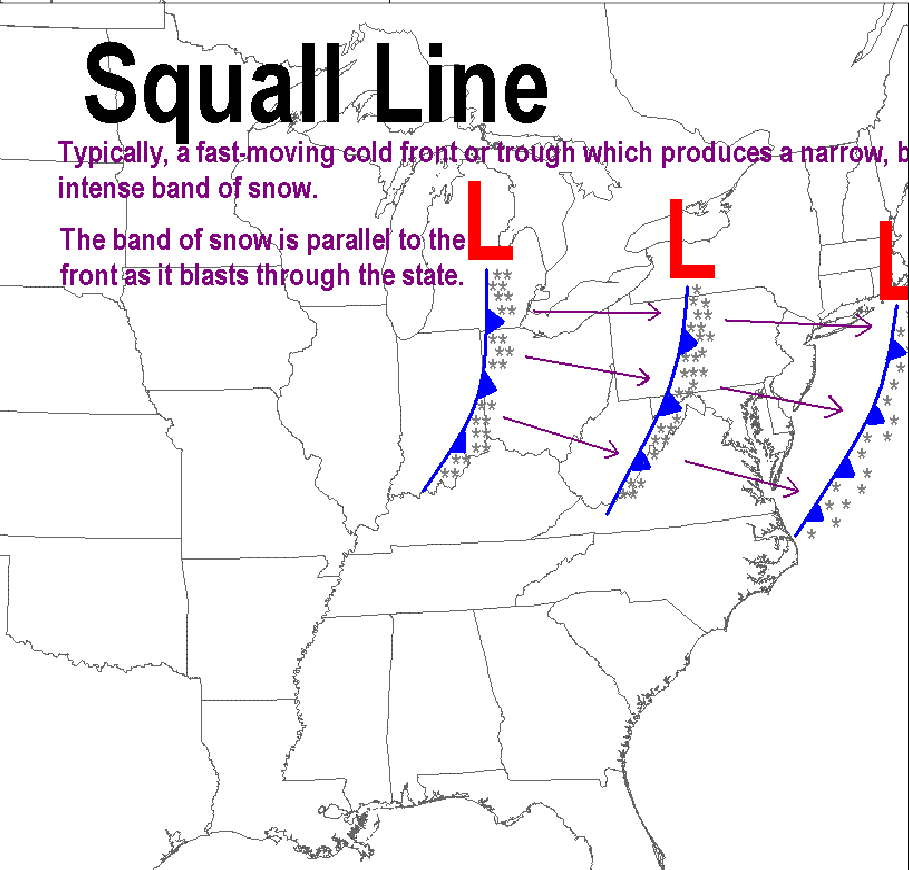
    Think of snow squalls like a thunderstorm. They’re brief, but intense.

    Snow squalls happen about once a winter or so here. Typically, they’ll form in Pennsylvania and quickly move east, dissipating as they do so. We see the weakened leftovers.

    These can bring a quick inch or two of snow. Even if they don’t, they still will bring whiteout conditions. Also, like thunderstorms, strong gusts of wind are common. Power outages and wind damage aren’t ruled out.

    Happens on occasion:

    Norlun trough

    A norlun trough is a highly focused area of snow on the northwest side of a low-pressure system. This is caused by an axis of shifting winds.

    Snow from a norlun trough only lasts a few hours. It gives meteorologists headaches as the heavy band may only be 20 or 30 miles wide. A matter of miles makes the difference between snow you can easily brush off your car, or one where the snowplow will come around multiple times.

    A great example of this happened on Dec. 5, 2018. Brigantine reported 7.5 inches of snow. Southern Ocean City picked up 2.5 inches of snow. Meanwhile, Toms River and Cape May had no measurable snow. That’s a narrow band of snow. My estimate is this happens two or three times per decade at the Jersey Shore.

    Delaware Bay Effect Snow

    My favorite kind of snow, which happens at part of the Jersey Shore, is Delaware Bay effect snow, the lesser-known sibling of the infamous lake effect snow from the Great Lakes. This only happens in lower Cape May County.

    Similar to the more famous version of the phenomenon, this is caused by very cold air going over the relatively milder Delaware Bay. Specifically, it’s when the air temperature about 5,000 feet high is 23 degrees lower than the temperature of the bay surface, according to Penn State University.

    Using the average bay temperatures during the winter, that means temperatures 5,000 feet high must be about 15 degrees or so. That happens a few times during the winter. However, winds need to be nearly due northwest to pick up the moisture off Delaware Bay. Since the bay is much smaller than the Great Lakes, there is little margin for error.

    Plus, winds should be at least 15 mph. Add that all up, and Delaware Bay effect snow only happens a few times a decade. When it does happen, it’s typically flurries. However, an inch or two occurs on rare occasions.

    Ocean Effect Snow

    Ocean effect snow mirrors Delaware Bay effect snow, where cold air crosses warmer water. This happens when there is a northeast wind. There are two ways in which we’ll see flakes fly from this.

    1. Cold northeast winds from Arctic high-pressure over Quebec or Atlantic Canada. This rarely occurs at the Jersey Shore, but will happen once or twice a winter in Eastern New England.
    2. During the late stages of nor’easters, winds will be from the northeast. This leads to low-level snow under larger storm clouds. When it happens, this is most often in Ocean and Atlantic counties. This still doesn’t happen every winter, though.

    It’s rare, but it happens:

    Lake effect snow

    Snow from the Great Lakes will reach New Jersey each winter. However, for this type of snow to fall in Atlantic and Cape May counties, everything has to be just right.

    The Appalachian Mountains usually dry out the snow before it gets to the other side. Also, what is snow in the mountains might just turn to rain when it reaches here. The snow would need to come from Lake Erie, with the wind blowing directly from the west-northwest. The last time this happened was on Dec. 29, 2020, but it was just flurries. Snow that sticks around happens once a decade, if that.

  • Save the dates for these 12 Jersey Shore weather events

    Save the dates for these 12 Jersey Shore weather events

    Swapping the previous year’s calendar in December for the new one in January is a social construct. January is still climatological winter. The shortest day of the year, the winter solstice, was already in December and the coldest days are still ahead of us.

    In fact, in the weather world, a “water year” runs October to September. The snow year goes from July to June. Planet Earth doesn’t care about whether it’s Dec. 31 or Jan. 1.

    However, we can still pick out a few weather, climate and solar phenomena to mark your 2025 calendar for the Jersey Shore. Meteorologist Kyle David, a fellow Rutgers University graduate, and I produced this list. The list is month by month and separated between the immediate shore, using the Sen. Frank S. Farley State Marina in Atlantic City, and for mainland areas, using Atlantic City International Airport in Egg Harbor Township.

    Data is from the National Oceanic and Atmospheric Administration or https://www.timeanddate.com/. Mainland weather and climate data traces back to Aug. 1943. For the shore, that data stretches back to December 1873.

    Happy New Year and enjoy tracking the atmosphere and science throughout 2025!

    READ THE REST OF SHORE LOCAL NEWS HERE!