
This article initially appeared in Shore Local News on July 24, 2025. Read it here!
Climatological summer, which runs June through August, is a little more than half over and the data shows that the weather has had us all sweating more than usual at the Jersey Shore.
The dew point, which measures how much water vapor is in the air in degrees, was much higher than usual at Atlantic City International Airport in Egg Harbor Township, and other places along the Jersey Shore, in June and July. In fact, the readings have been some of the highest on record.
Here’s how to think about the dew point in terms of how it feels during the summer.
40s = Dry
50s = Refreshing
60+ = A bit humid
65+ = Noticeable
70+ = Sticky
75+ = Oppressive
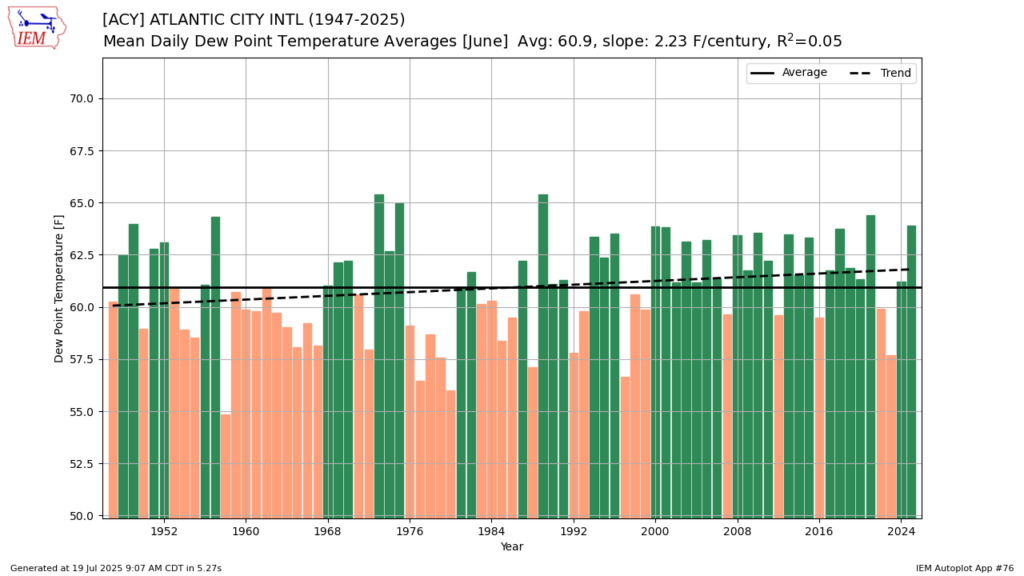
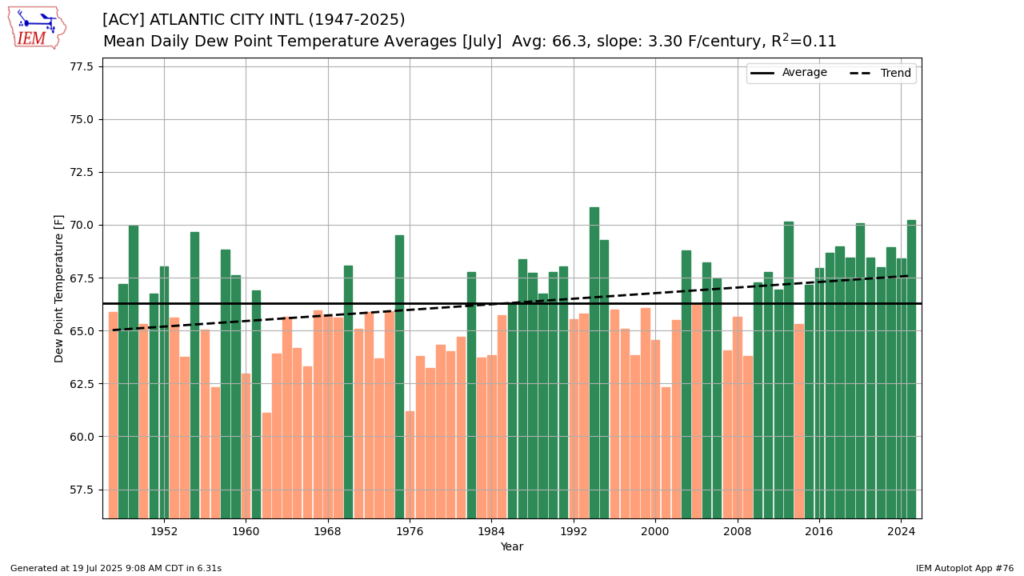
At ACY Airport, June had the seventh highest dew point on record going back to 1947, according to the Iowa Environmental Mesonet. The month averaged a dew point of 63.9 degrees – three degrees above the average. Through July 18, that spiked to 70.2 degrees month-to-date. It’s the second highest on record and 4 degrees above average. Only 1994 was higher.
It’s even more extreme farther north on the Jersey Shore. Monmouth County Executive Airport in Wall had the highest June dew point on record at 64.6 degrees. From July 1 to 18, the 72.1-degree dew point came in as the third highest on record for the period. Monmouth records go back to 1955, but weren’t consistently reported until 1992.
It’s even more incredible that the dew point is this high considering that the first half of June was cooler than average and the dew point can never fall below the air temperature.
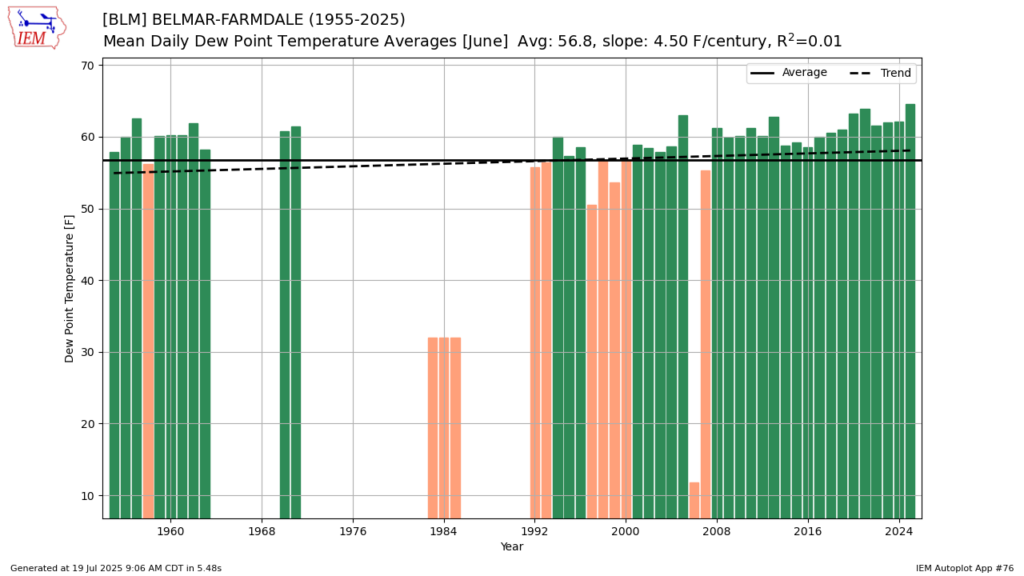
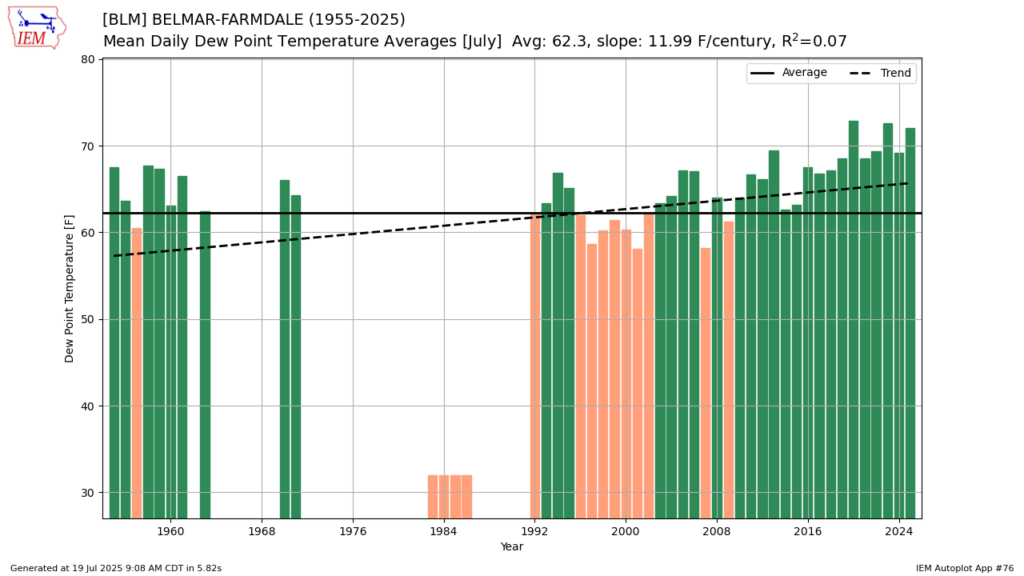
You can thank our changing climate and local weather conditions for the sweaty feeling in the air.
Why so humid? The weather side
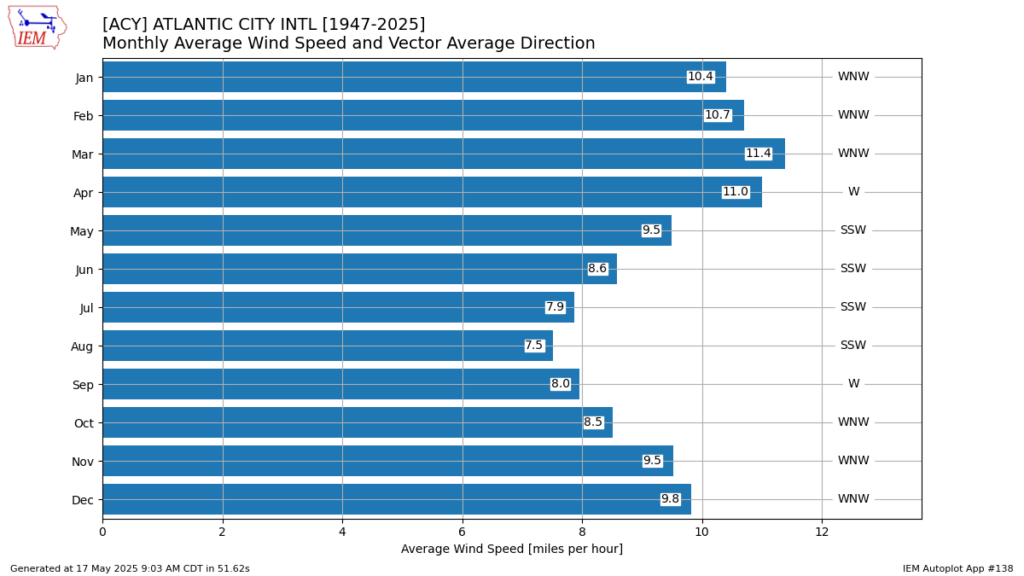
In New Jersey, any wind from the southwest, south, southeast or east is going to bring more humidity than usual. The winds from the southwest and south pump in that juicy air from the Gulf of Mexico (Gulf of America). Meanwhile, winds from the southeast and east will blow in moister ocean air.
Climatological summer, from June 1 to July 18, had winds blow from these directions roughly 55% of the time at Atlantic City International Airport, the Mesonet reports. The long-term average for the entire climatological summer is 35%. The different lengths of time mean this isn’t a perfect comparison, but it’s valid enough for this purpose.
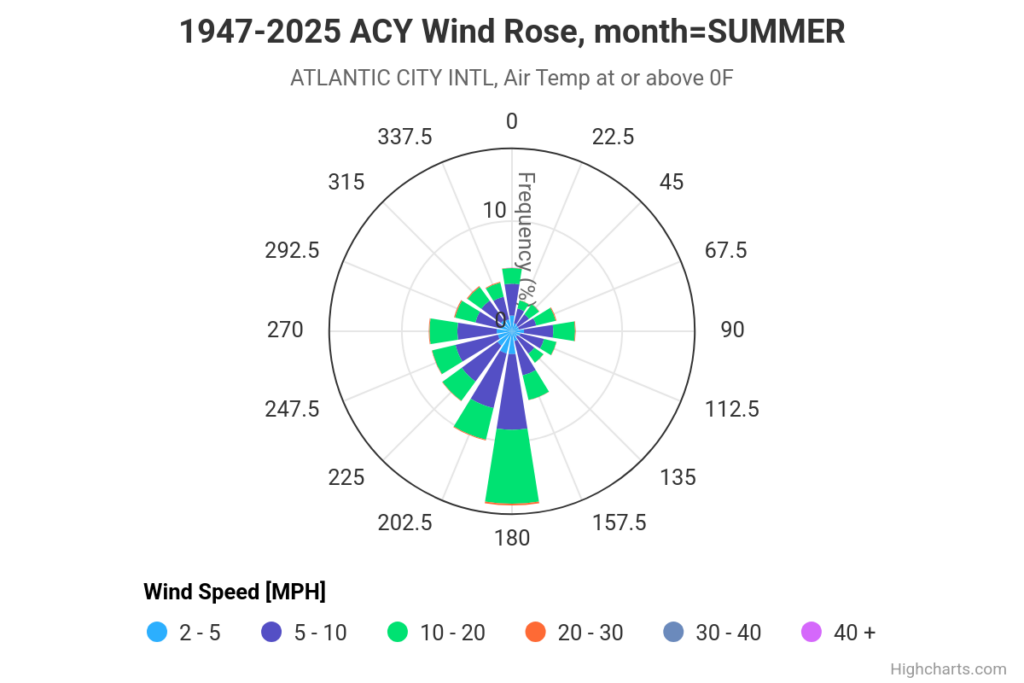
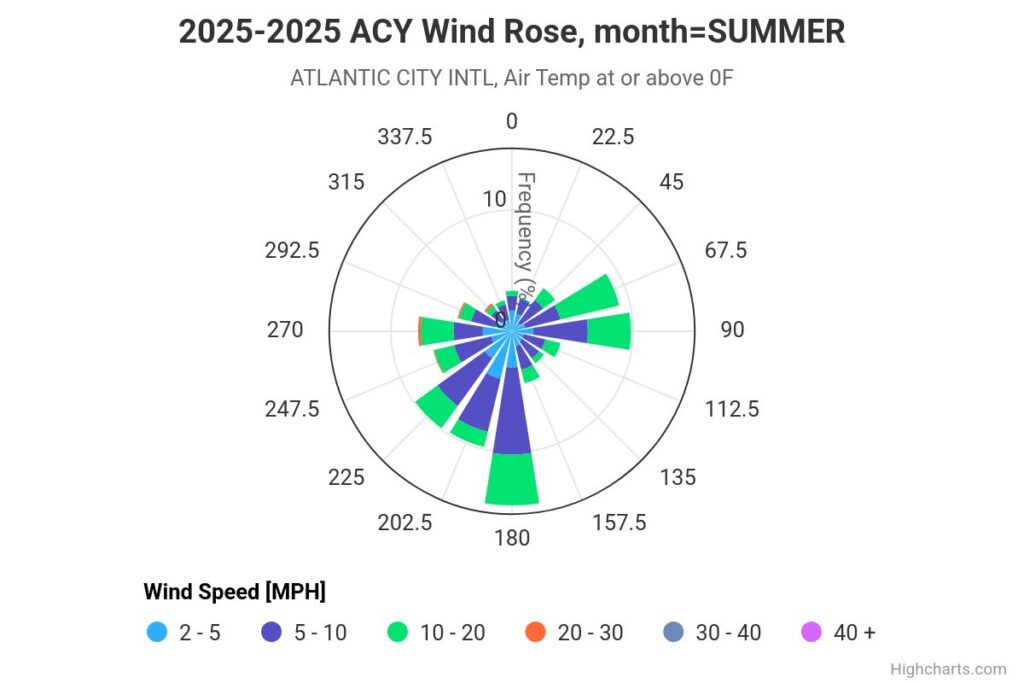
Along the shore, the wind at Monmouth County Executive Airport came from the more humid directions about 45% of the time this year. Usually, it’s only about 40%. The big difference is that the main wind direction this year was from the east.
At ACY Airport, the wind mostly came from the south. This made the air feel extra moist, with the highest humidity in years.
Humidity is a measurement of how much water is in the air compared to the air’s temperature. At ACY Airport, the humidity hit 71.9% in June – the highest since 2018. In July it reached 76% through July 18, the highest since 2021.
However, summer humidity can be tricky to understand. The percentages in June and July are high, but in winter, humidity can be 90% or more for days. But it doesn’t feel as stickymbecause it depends on the air’s temperature. Warmer air can hold more water so summer feels much more humid, even if the percentage is lower than in winter.
That leads me to the next point about this sweaty, sultry stretch.
Why so humid? The climate change side
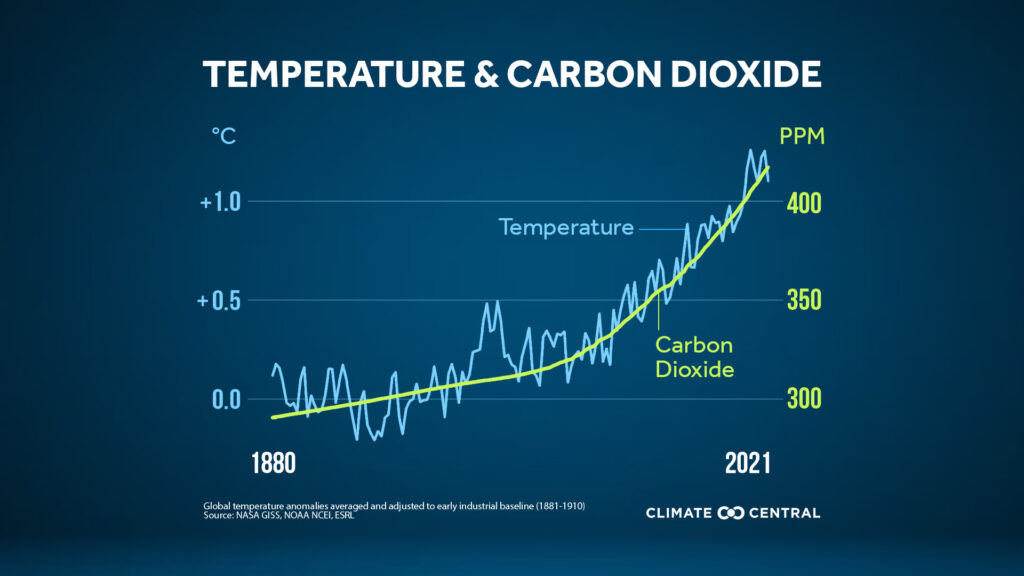
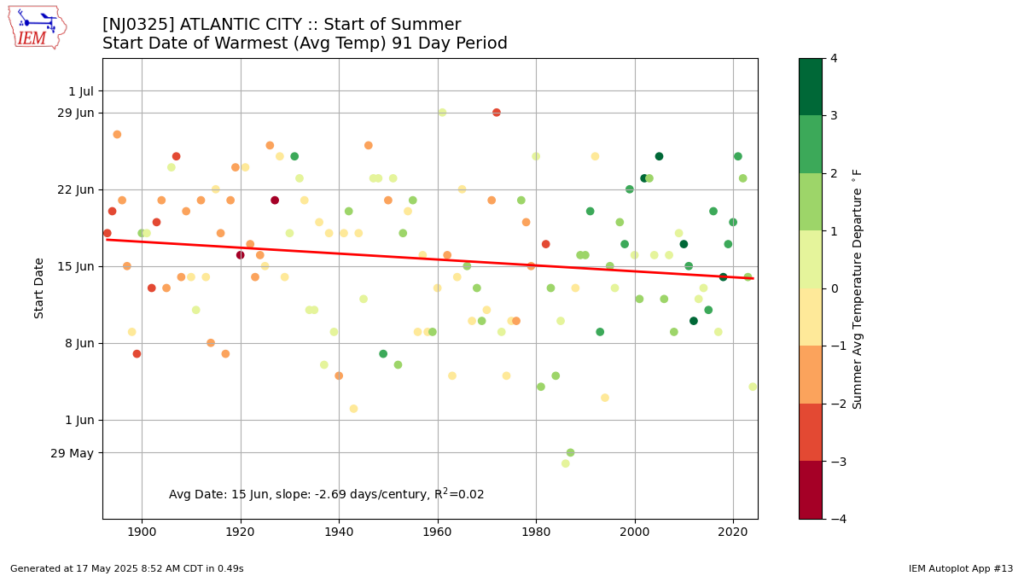
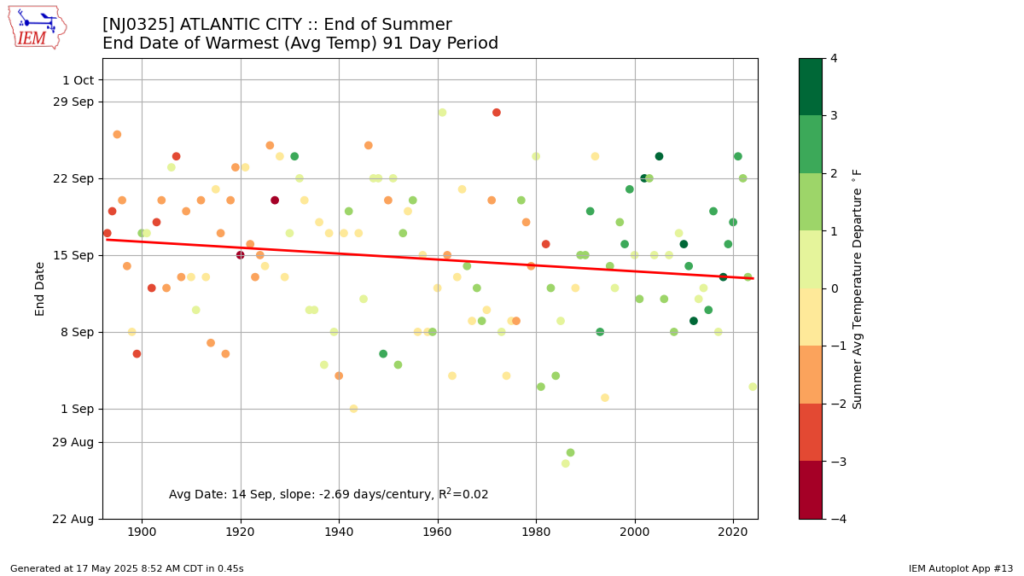
As our summers have become hotter in recent decades, the atmosphere’s capacity for holding more moisture in the air has increased, too. That’s meant more days where the dew point can be a sticky 70 degrees or an oppressive 75 degrees.
During July, dew points have increased 3.3 degrees per century at Atlantic City International Airport.
The most recent July with a dew point below the long-term average was 2014, and 2009 before that. In June, it’s a long-term increase of 2.2 degrees per century.
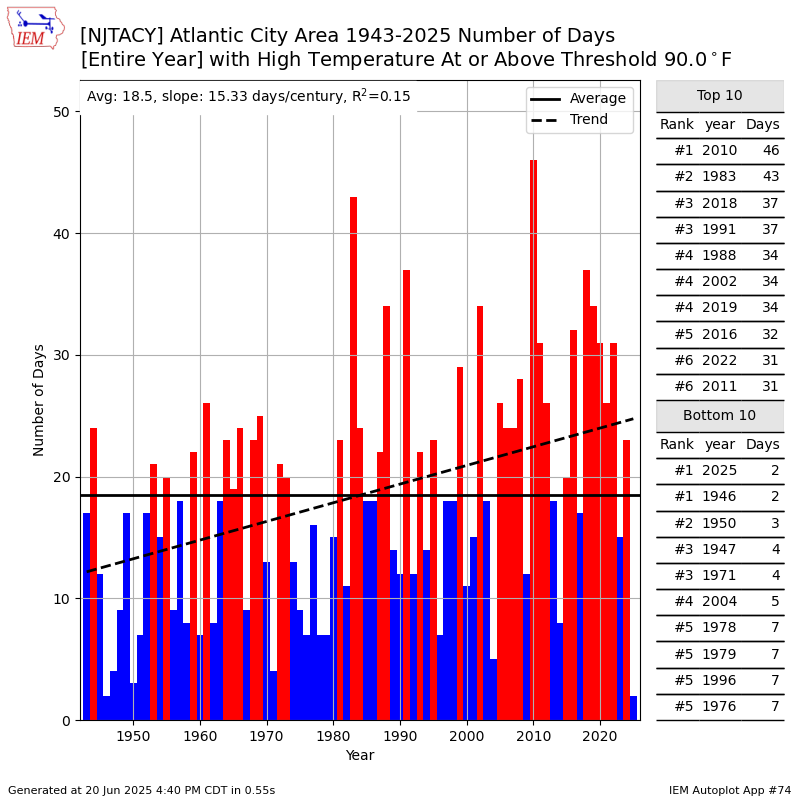
The data proves that it’s been muggier in recent decades. We can also take a look at the heat index, too. The heat index is what the temperature feels like to the human body, according to the American Meteorological Society.
At ACY Airport and Monmouth County Executive Airport, the heat index – this is how hot it feels when you combine temperature and humidity – for June and July 2025 so far ranks between fifth and seventh place compared to past years. Almost all the years that felt hotter than this June and July happened after 2008, except for one June at Monmouth.
However, here’s something interesting: in some places, the air’s humidity has actually gone down over time.
At ACY Airport, humidity drops at a rate of 3.85% per century. In June 2025, the humidity there was only the 46th highest out of 78 years recorded by the Iowa Environmental Mesonet. For July so far, it’s ranked 26th. But at Monmouth County Airport, humidity has gone up instead.
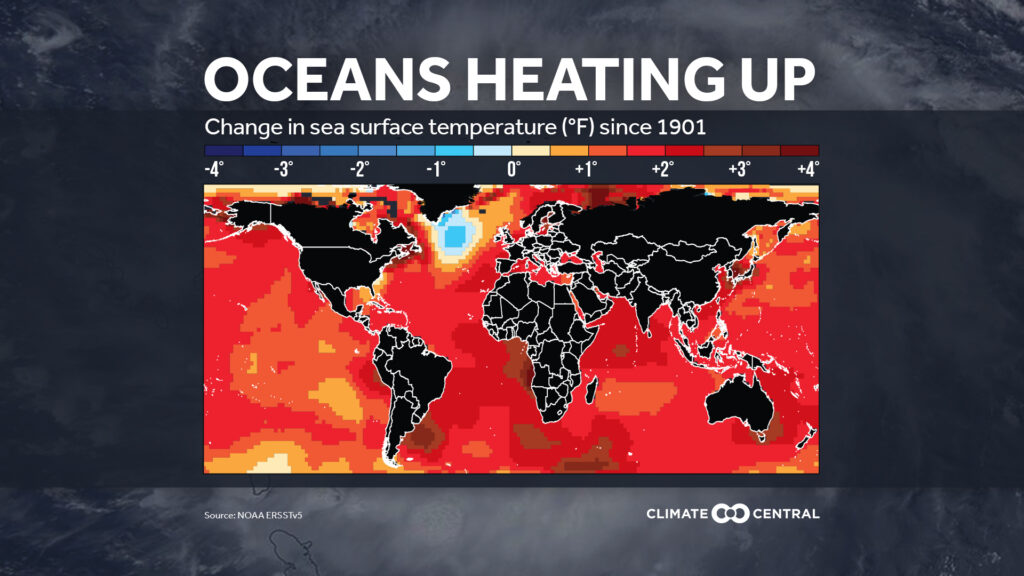
Not only is the air getting warmer because of climate change, mostly caused by people, but the ocean water is getting warmer, too.
When the ocean gets hotter, more water evaporates into the air. This makes the air hold more moisture, which raises the dew point – that’s the temperature when the air gets so full of water it starts to form dew. It also leads to bigger, heavier rainstorms.
The sea surface temperature in the Gulf increased between 1.35 and 2.25 degrees Fahrenheit from 1970 to 2020, according to peer-review research published in the Journal of Climate in August 2022.
Last August, Brian McNoldy, a climatologist for the University of Miami, found that the Gulf was the hottest ever recorded in modern times.
The Atlantic Ocean on the United States East Coast increased between 1.8 to 3.6 degrees during the same time period, according to the National Oceanic and Atmospheric Administration.
New Jersey’s more muggy summers will continue
Given the decades-long trends of higher summer heat and higher summer water temperatures, expect more summers like the one we’ve had already in the decades to come. In fact, climate models project a 1.8 to 3.6 increase in dew points come 2050, compared to 2018, according to that year’s National Climate Assessment, which is mandated by Congress.
Whether the increase in dew points due to climate change is a bad thing or good thing is not for me to say. However, expect more sweaty summers like this in decades to come.