Author: joemartuccillc

  • Rain to a BIG blast of Fall 🍁 | 10/8/2025 NJ Weather Forecast

    Rain to a BIG blast of Fall 🍁 | 10/8/2025 NJ Weather Forecast

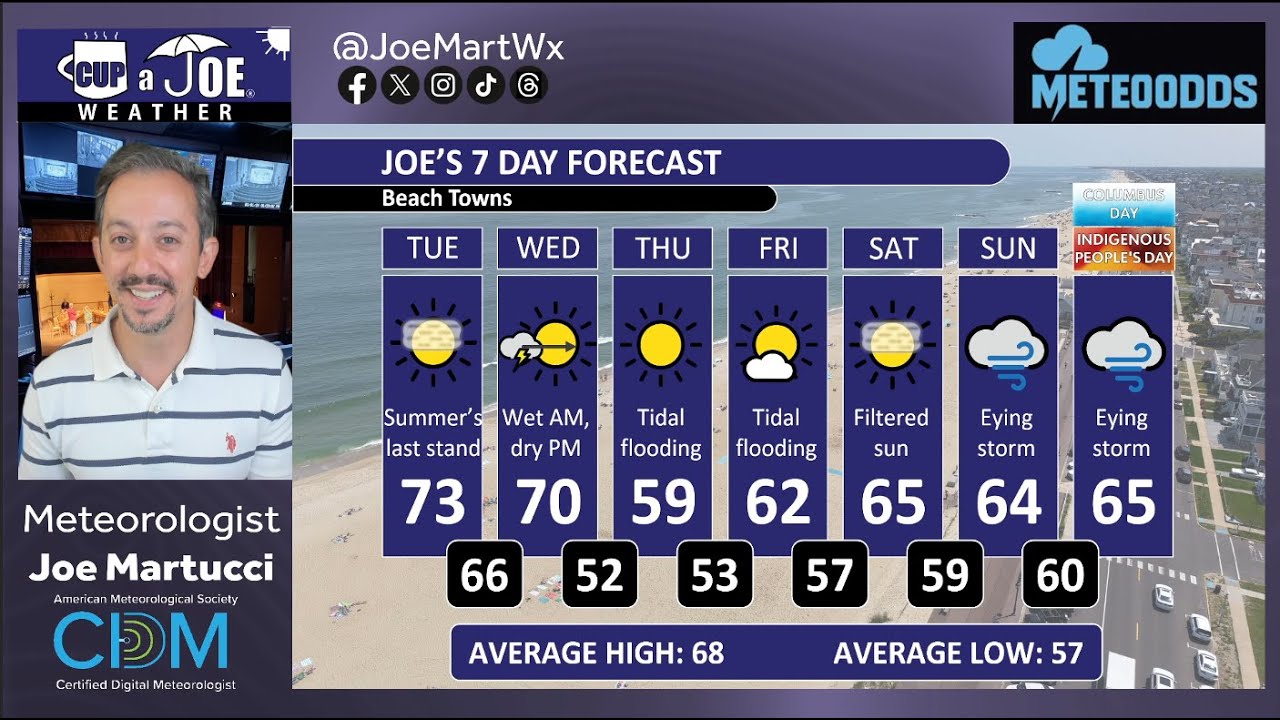
    Rain this morning is the dividing line between the summer air the past few days and a BIG blast of Fall. Coastal flooding arrives Thursday and Friday. Tune in to see where will flood in Atlantic City and Manasquan. Then, we need to focus on a nor’easter for early next week.

    Follow my work: www.cupajoe.live
    Jolt your brand, advertise with me: joe@cupajoe.live

  • Summer’s last stand?! | Tuesday, 10/7/2025 NJ Weather Forecast

    Summer’s last stand?! | Tuesday, 10/7/2025 NJ Weather Forecast

    đŸ“čTUESDAY’S FORECAST | A few hours of soaking rain divides today’s summer weather to a big blast of Autumn! Let’s time it out for you and then explain the potential for a nor’easter (gulp) next week.

    Dominate your fantasy leagues and bets with weather-driven data. MeteoOdds gives you innovative tools, player/game weather impacts, and detailed forecasts. Join FF+ by using the code WEATHER and get 50% off, for life! Turn forecasts into fantasy wins — only at www.meteoodds.com.

  • Rutgers Football’s most extreme home games, by the weather

    🏈How many of these extreme Rutgers football home weather games do you remember?

    🔮Happy bye-week, RU fans.

    You can enter to win 2 tickets and parking at the St. George Greek Orthodox Church in our Rutgers Red Zone Giveaway. Enter by 10/14 to win for the Oregon Homecoming game! https://cupajoe.sparkable.opalstacked.com/rutgers-football-contest/

  • đŸ€©Beau-ti-ful! | Saturday, 10/4/2025 NJ Weather Forecast

    đŸ€©Beau-ti-ful! | Saturday, 10/4/2025 NJ Weather Forecast

    đŸ“č SATURDAY’S FORECAST | A beau-ti-ful stretch of Jersey Shore weather is here this weekend! Your weather app won’t show you the current Fall Foliage conditions in NJ though.

    Captain’s Tree Service LLC handles all your tree needs, including tree removals, trimming, pruning, and 24/7 emergency care. They’re reliable, affordable, and trusted by families. Call the Captain today for a free estimate at (856) 883-7682!

    Follow my work: www.cupajoe.live
    Jolt your brand, advertise with me: joe@cupajoe.live

  • Temps are movin’ on UP | Friday, 10/3/2025 NJ Weather Forecast

    Temps are movin’ on UP | Friday, 10/3/2025 NJ Weather Forecast

    FRIDAY’S FORECAST | It’s chilly this morning! However, this is the lowest temperatures for a while. We’ll be climbing up the thermometer, just in time for the weekend. Plus, tune in for something your weather app won’t show you: a sun dog!
    Follow my work: www.cupajoe.live
    Jolt your brand, advertise with me: joe@cupajoe.live

  • Absurd temperature swings in NJ | September 2025 Monthly Weather Roundup

    Absurd temperature swings in NJ | September 2025 Monthly Weather Roundup

    The Monthly Weather Roundup is sponsored by Jennifer Ansbach Coaching / The Cozy Thesis — helping students and adult learners Write. Revise. Rise. Learn more at JenniferAnsbach.com.

    New Jersey’s September weather broke the usual patterns. It began with a brisk chill. Then it shifted back to summer warmth. It’s one of only a few times on record when the second half of September was warmer than the first half. Overall, temperatures ended up a bit above average.

    Dave and Joe then noted drought warnings in northern areas. Coastal regions faced heavy rain. Eroding beach sands now threaten winter storm defenses. They also discussed Hurricane Sandy’s 13th anniversary and whether memories of the storm are fading. Stay tuned for updates on hurricane risks and stunning fall foliage.

    Recap the month of weather that was. It’s all Jersey, with two of Jersey’s best weather guys. New Jersey State Climatologist Dr. Dave Robinson as well as Meteorologist Joe Martucci, owner of Cup A Joe Weather and Drone take you through the temperatures, rain, snow, coastal flooding and much more. New episodes come out around the beginning of every month.

    Cup A Joe Weather and Drone: www.cupajoe.live
    NJ Climatologist’s Office: www.njclimate.org

  • The Fujiwhara Effect: When 2 tropical cyclones collide

    The Fujiwhara Effect: When 2 tropical cyclones collide

    This article initially appeared in Shore Local News on 10/2/2025. The article was update to include more current information from Imelda and Humberto on 10/2/2025

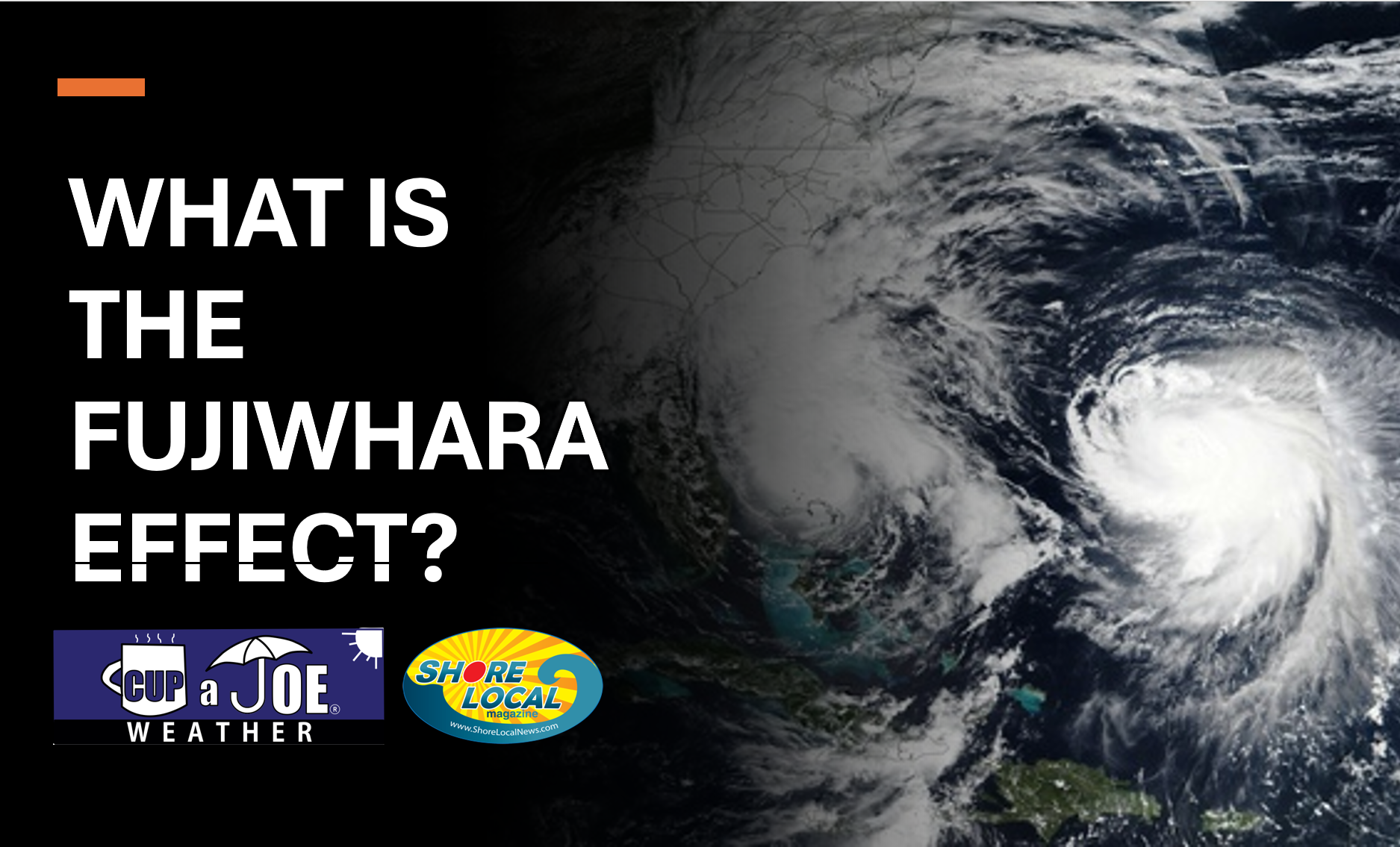
    Last week, I mentioned on my digital and social weather channels that Hurricanes Humberto and Imelda could undergo a rare interaction called the Fujiwhara Effect.

    Humberto and Imelda partially made this happen, but not completely. Either way, it doesn’t matter for our Jersey Shore weather forecast. A powerful arctic, high-pressure system kept the rain away from these two storms. However, there were gusts to 40 mph and coastal flooding on Oct. 1 and bad surf continues into the weekend.

    The Fujiwhara Effect, like polar vortex, heat dome and derecho before it, brings a new weather word into public discourse. And for your Shore Local meteorologist, it means I get pumped to explain a new-to-many weather phenomenon.

    What is the Fujiwhara Effect?

    “The tendency of two nearby tropical cyclones to rotate cyclonically about each other as a result of their circulations’ mutual advection,” The American Meteorological Society’s Glossary of Meteorology says. However, let us break that down even more.

    Think of the Fujiwhara Effect as a square dance. Instead of pairs of dancers, they are pairs of tropical storms or hurricanes.

    In square dancing, pairs of dancers spin and move in patterns together. The same is true with the Fujiwhara Effect. Instead of a caller’s instructions, though, storms follow nature’s rules.

    Technically, the Fujiwhara Effect happens when storms are within 900 miles of each other’s circulation. That is the distance from Ocean City, N.J., to Tampa, Fla. That is not much in the vast expanse of the Atlantic Ocean.

    The two storms’ counterclockwise (Northern Hemisphere) or clockwise (Southern Hemisphere) winds will start to spin closer to each other. Once they are about 200 miles apart, one of three scenarios happens:

    1.           The larger storm will absorb the smaller storm into its circulation.

    2.           The two storms will merge, creating one more powerful storm.

    3.           Both storms will weaken due to the increase in wind shear or change of wind direction with height.

    The Fujiwhara Effect is named after Sakuhei Fujiwhara, a Japanese meteorologist who first described this phenomenon as a theory in a 1921 research paper. Turns out his theory was correct.

    Where does the Fujiwhara Effect occur most often?

    The northern Pacific Ocean is the place where it happens the most, the American Meteorological Society reports.

    The Pacific Ocean, specifically the western Pacific Ocean, is the world’s most active tropical cyclone basin, thanks to its very warm water and humidity. Plus, since the Pacific Ocean is the world’s largest ocean, more storms can simply spin around there, and potentially come into contact with each other.

    It is rare to have the Fujiwhara Effect in the Atlantic Hurricane Basin. Records are not kept on them, but they happen only once every couple of years. Compared to the Pacific Ocean, there is less area for tropical storms or hurricanes to develop.

    Also, our ocean has just one main storm track: Off the West Coast of Africa to the Caribbean Islands, turn north between the United States East Coast and Bermuda, and then northeast into the northern Atlantic Ocean. This gives less opportunity for storms to cross paths.

    Notable Fujiwhara Effect storms

    The Fujiwhara Effect likely took place in the Atlantic Hurricane Basin in 2016 when Hurricane Matthew and Tropical Storm Nicole interacted. They did not fully dance with each other, however, Matthew’s path shifted a bit, which brought major flooding to the East Coast of Florida.

    The last time on record that Atlantic storms underwent a full Fujiwhara Effect was in 1995 with Hurricanes Iris and, fittingly for this article, Humberto. On Aug. 23, 1995, Hurricane Iris was on a northern path from the Lesser Antilles in the tropical Atlantic Ocean. Then it interacted with Humberto. The Fujiwhara Effect took place, jolting Iris 300 miles to the east.

    Both storms weakened with the Fujiwhara Effect. After the interaction, Iris was downgraded to a tropical storm, while Humberto was downgraded from a Category 2 to a Category 1 hurricane.

    In the eastern Pacific Ocean, closer to North America, Hurricanes Hilary and Irwin in July 2017 showed a good example of the Fujiwhara Effect when the two made a full pivot around each other as they moved north up the Mexican coastline.

    The storms did not merge. They ended up weakening, in part due to the Fujiwhara Effect, and in part due to moving over cooler water.

    Joe Martucci, a Certified Broadcast Meteorologist and Digital Meteorologist, is the President and Director of Meteorology for Cup A Joe Weather and Drone. You can connect with him at cupajoe.sparkable.opalstacked.com/.

  • 😎High pressure DOMINATES | Thursday, 10/2/2025 NJ Weather Forecast

    😎High pressure DOMINATES | Thursday, 10/2/2025 NJ Weather Forecast

    It’s cool, it’s crisp, it’s calm, it feels like Fall! The NJ Forest Service just released their forecast on when the fall colors will be brightest. We talk about that plus a Locals’ Summer special in the 7-day.

    Follow my work: www.cupajoe.live
    Jolt your brand, advertise with me: joe@cupajoe.live

  • Dry on land, ROUGH ocean, thanks to Imelda | Tuesday, 9/30/2025 NJ Forecast

    Dry on land, ROUGH ocean, thanks to Imelda | Tuesday, 9/30/2025 NJ Forecast

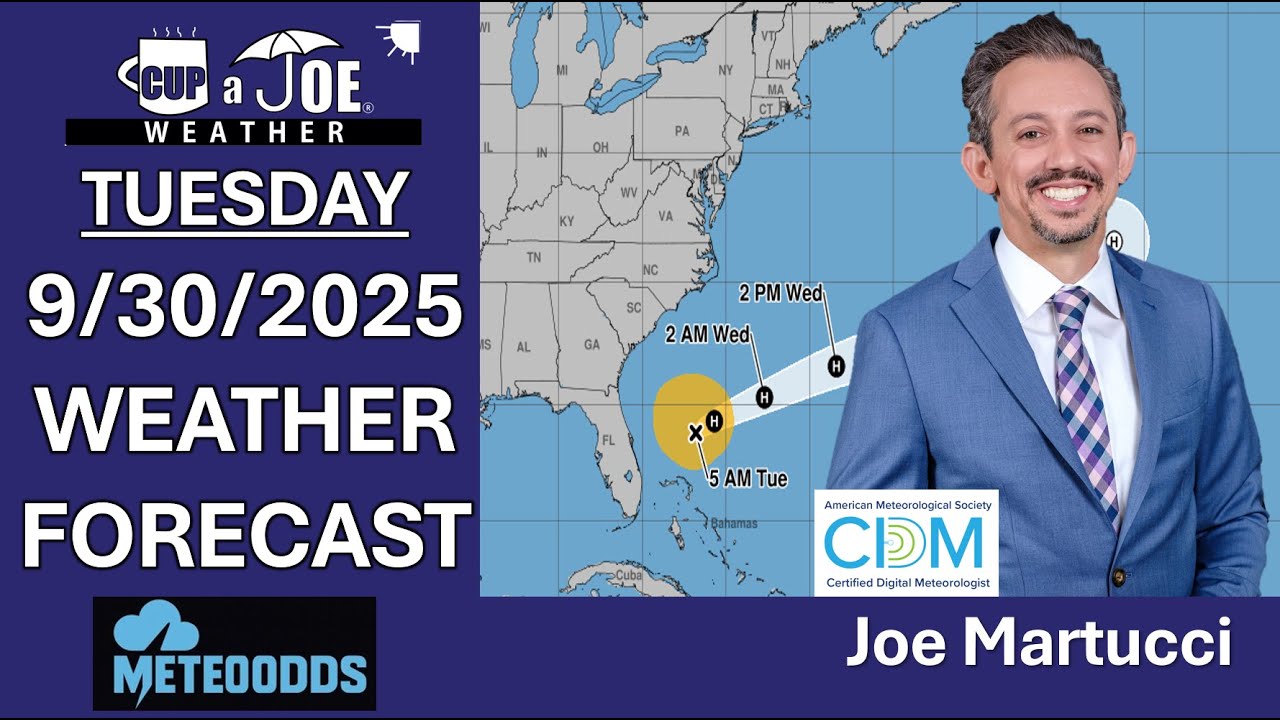
    đŸ“čTUESDAY FORECAST | T.S. Imelda will churn up our ocean and, eventually, bring coastal flooding and strong winds. Otherwise, though, we’re dry! Dominate your fantasy leagues and bets with weather-driven data.

    MeteoOdds gives you innovative tools, player/game weather impacts, and detailed forecasts. Join FF+ by using the code WEATHER and get 50% off, for life! Turn forecasts into fantasy wins — only at www.meteoodds.com.

  • Despite the quiet, there’s still plenty of 2025’s hurricane season to go

    Despite the quiet, there’s still plenty of 2025’s hurricane season to go

    This article initially appeared in Shore Local Magazine on 9/25
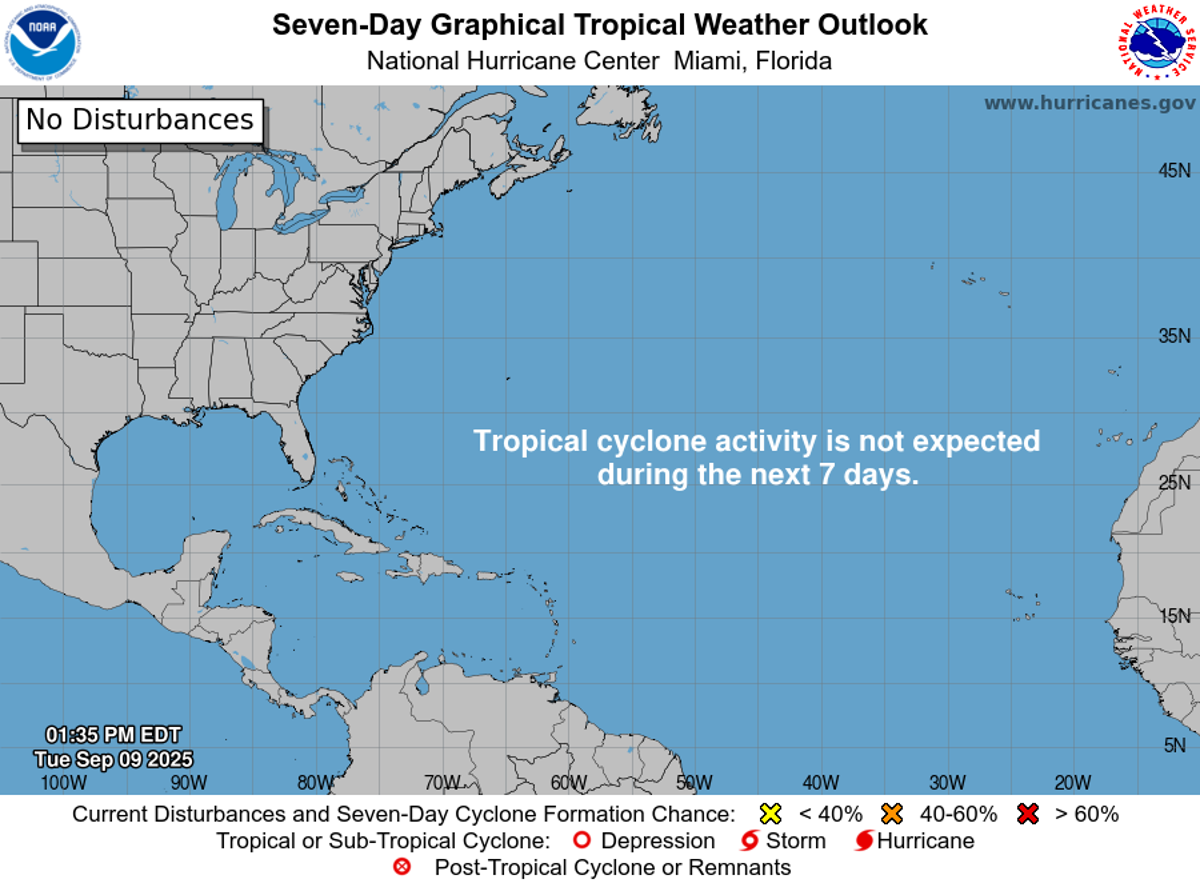
    Thankfully, hurricane season has remained quiet. No major storms have made landfall in the United States, or really anywhere. By the numbers, this is a quieter-than-average year so far. However, don’t be lulled into complacency.

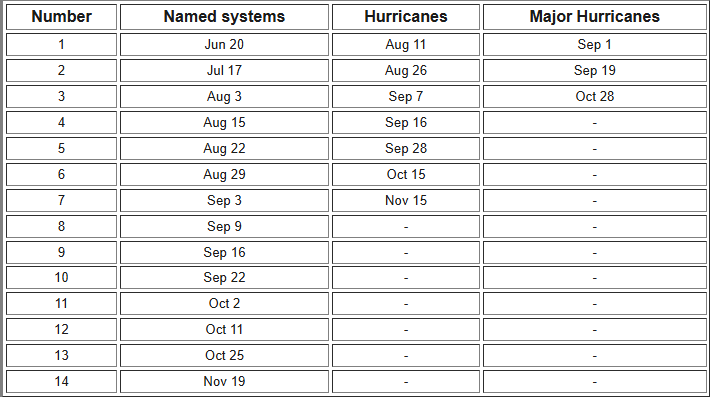
    By late September, the Atlantic Hurricane Season typically reaches its 10th or 11th named storm on average. That would be the “J” or “K” named storm. That’s “Jerry” or “Karen” according to the World Meteorological Organization, which is the group that determines storm names.

    Through Sept. 26 we’re only on Humberto, the eighth storm. She is expected to spin east of Bermuda, well away from the East Coast. New Jersey has seen elevated surf and a risk for rip currents. However, there are no direct impacts.

    Average progress of the Atlantic Hurricane Season from 1991-2020. Image via the National Hurricane Center.

    By the Sept. 27-28 weekend, Imelda. That would take us to the ninth named storm. That’s closer to average, but still on the quiet side.

    Now is not the time to be lulled into a sense of security, though. The forecasts for a more-active-than-usual season still have time to come true.

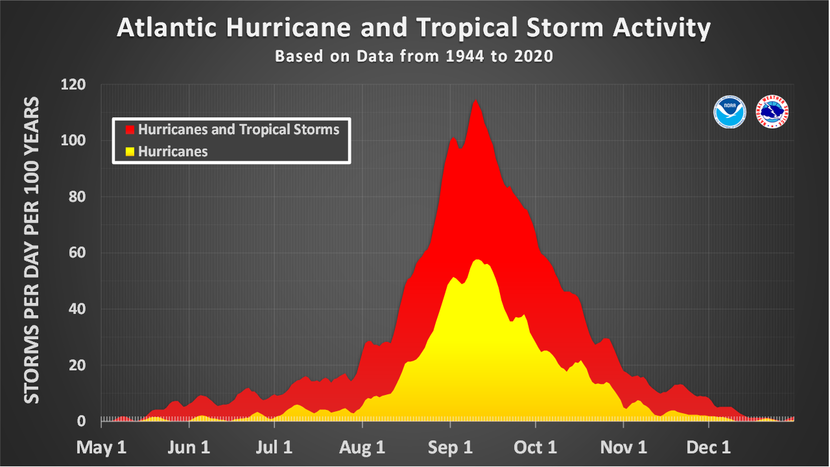
    Sixty percent of tropical activity occurs after Sept. 10 in the Atlantic Ocean, according to the National Hurricane Center, a government agency in Miami, Fla. But it came and went with a whimper. This has been one of only a handful of years when there were no active storms in the Atlantic Hurricane Basin during the season’s peak.

    By late September there is still plenty of hurricane season to go. Sandy, you will recall, made landfall near Brigantine on Oct. 29, 2012. The hurricane season officially runs from June 1 to Nov. 30, so it’s a backloaded season.

    Here’s a look at the latest hurricane forecasts from agencies I highly respect. These forecasts include what has already happened. Through Sept. 22 there have been seven named storms, two hurricanes and one major hurricane – Category 3, 4 or 5 storm.

    National Hurricane Center (from Aug. 7):

    • 13 to 18 named storms
    • 5 to 9 hurricanes
    • 2 to 5 major hurricanes

    Colorado State University (from Aug. 6):

    • 16 named storms
    • 8 hurricanes
    • 3 major hurricanes

    United Kingdom Met Office (from Aug. 1):

    • 16 named storms
    • 6 hurricanes
    • 4 major became

    There’s also something called Accumulated Cyclone Energy (ACE). I like to use this, and you’ll see people using this more often in the future. ACE measures hurricane season energy by adding up storm strength and duration score as it’s going on.

    Colorado State University, as well as the United Kingdom Met Office, issues forecasts for ACE. Both predict a 140-146 ACE index.

    This is all at or just above average. These forecasts still predict that all the activity we’ve had since hurricane season started will be duplicated between now and when the season ends two months from now; other words, just as hurricane season usually goes.

    Have your evacuation plan and get your go bag ready in case you need to leave. In the best case scenario, it will collect dust and stay dry during a quiet New Jersey hurricane season.

    Joe Martucci, a Certified Broadcast Meteorologist and Digital Meteorologist, is the President and Director of Meteorology for Cup A Joe Weather and Drone. You can connect with him at cupajoe.sparkable.opalstacked.com/.