Extreme (level 3/4) drought returned to NJ in Cape May and southern Cumberland counties, according to June 11th’s update from the United States Drought Monitor. It’s now the worst statewide drought since March 2025. However, with it being summer, and water usage at its peak for the year, mandatory water restrictions are closer than ever.
Nancy Adler Nutrition has practiced nutrition weight loss, naturally, for 30 years . Listen every Saturday to Nancy Adler Nutrition Live Saturday 11AM-1PM on WOND radio. Ready to lose the weight? Call Nancy at 609-653-4900.
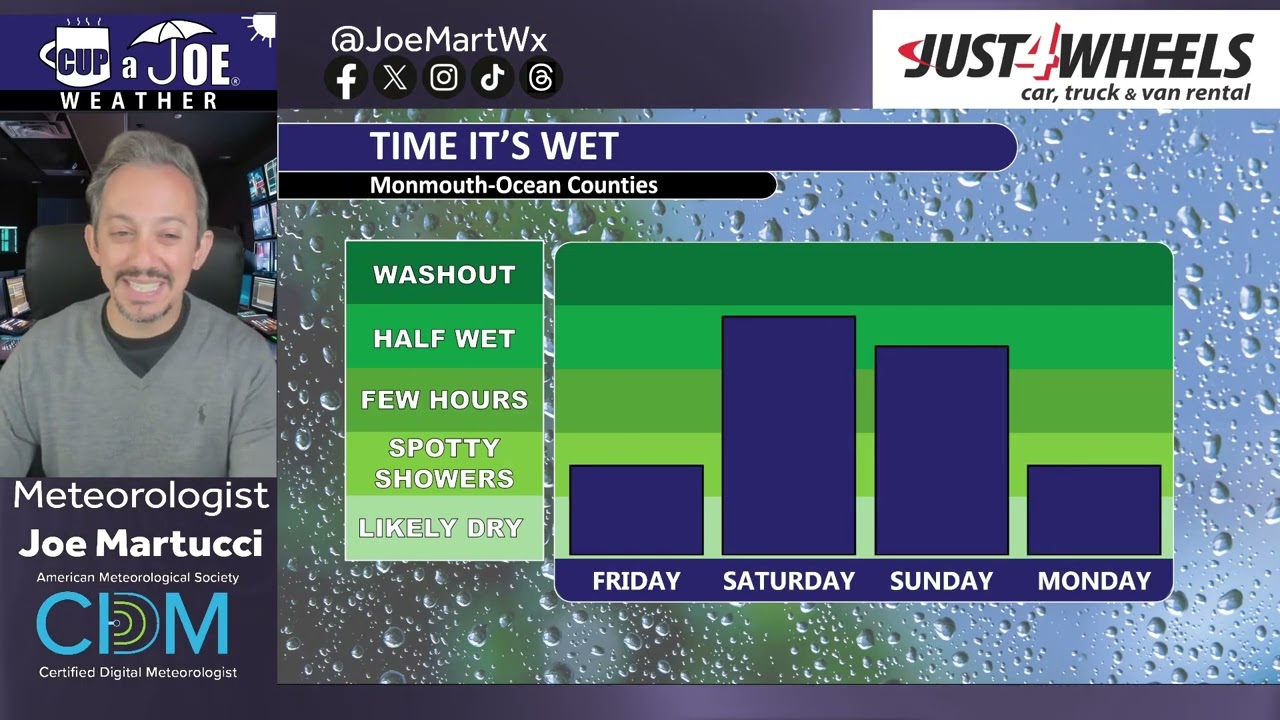
THURSDAY’S FORECAST | Temperatures are 20 to 30F cooler today than they were yesterday. Such is like near Memorial Day Weekend. Much needed rain comes for MDW, that’s the silver lining. I do NOT believe it’s a full washout, though. It even gets warm! Let’s talk.
Why settle for big chains? Choose Just4Wheels’ family-owned locations all across NJ! Rent brand-new sedans, passenger vans, box trucks and more today! Visit www.just4wheels.com or call 877-650-3500.
A “severe” drought (level 2/4) drought now engulfs 50% of New Jersey, including most of the Jersey Shore, according to the United States Drought Monitor on May 14. That’s 30% increase from last week.
The NJ Department of Environmental Protection put the state in a drought warning in November. However, if widespread, soaking rain does not come in the next month, mandatory water restrictions would be possible. That comment comes from State Climatologist Dr. Dave Robinson from our Monthly Weather Roundup show on May 5.
Drought continues for the sixth month in a row in New Jersey, according to the state’s Department of Environmental Protection. Now, though, other indicators are showing warning signs of a crippling drought, too.
Believe it or not, April was in the top 10 for warmest Aprils since records started in 1895. That’s true even though April 21 brought a killing freeze to most of New Jersey only seen once or twice a decade.
Recap the month of weather that was. It’s all Jersey, with two of Jersey’s best weather guys. New Jersey State Climatologist Dr. Dave Robinson as well as Meteorologist Joe Martucci, owner of Cup A Joe Weather and Drone, take you through it all.
When I talk about this in my weather videos, or post about it on social media, some variation of the same question comes up.
“How could the Jersey Shore be in drought? We had so much snow last winter.”
While yes, we did have well-above-average snowfall (26.1 inches at Atlantic City International Airport, 18.6 inches in Margate, and 39.2 inches in Long Branch), but lots of snow doesn’t necessarily cure a drought. The correlation is pretty weak.
Drought is defined as “a period of abnormally dry weather sufficiently long enough to cause a serious hydrological imbalance,” according to the American Meteorological Society. In other words, if the water going into the environment is less than the water being taken out of the environment (by humans, animals, evaporation, etc.) for a long period of time, you go into drought.
Water comes into the environment by precipitation. Snow is precipitation, so is rain. However, on average in New Jersey, it takes 11 inches of snow to get 1 inch of precipitation. Meanwhile, 1 inch of rain equals 1 inch of precipitation.
Snow to liquid ratio climatology. On average for New Jersey, it takes 10 to 11 inches of snow to produce one inch of precipitation. (via the National Weather Service)
Here’s a look at how much snow, precipitation and average precipitation fell at Atlantic City International Airport from December to February:
In December, there were 2.2 inches of snow, 3.03 inches of precipitation, vs. 3.76 inches of average precipitation.
January saw 6.7 inches of snow, 3.78 inches of precipitation, vs. 3.44 inches of average precipitation.
February recorded 17.2 inches of snow, 3.53 inches of precipitation, vs. 3.12 inches of average precipitation.
Snowfall was about 75% above average during this time. Precipitation was about 5% below average.
What about the snowpack?
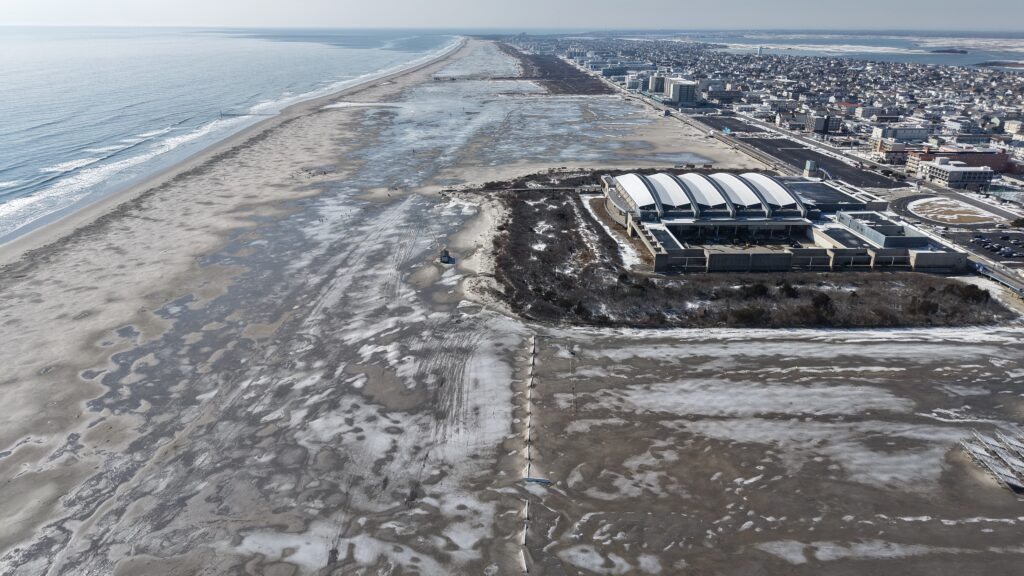
This winter probably felt extra long because the snow was on the ground for so long. Twenty-nine days had at least 1 inch of snow covering the ground at Atlantic City International Airport, according to the National Oceanic and Atmospheric Administration, the sixth longest since records began in 1945.
default
Snow on the ground helps prevent drought from worsening. It allows for snow to slowly melt and seep into the ground. It also prevents the sun from pulling water from the ground and evaporating into the atmosphere.
However, the snowpack wasn’t deep enough nor did it hang around long enough to have a significant impact on the drought.
All things considered, it was a lack of precipitation in March that slid the Jersey Shore into a deeper drought.
Drought outlook for NJ
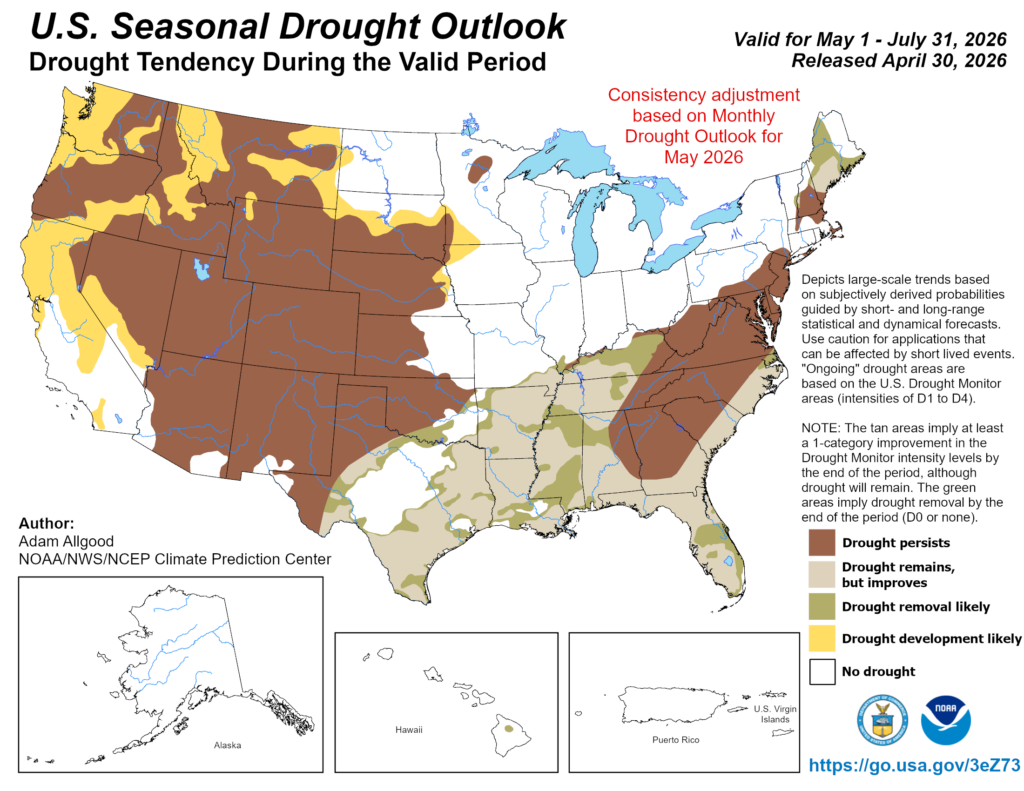
NOAA is forecasting that drought conditions will persist through the end of July, according to its April 30 update.
Precipitation across the Jersey Shore, not just in a town or two, needs to average at least 5 inches during this time in order to drown out the drought. More than 4 inches of evaporation occurs during June and July.
We’ll need a few coastal storms, or a very gloomy next month or two, in order to do that. If not, don’t be surprised to see mandatory water restrictions by the end of the summer.
After 3 straight months with colder than average temperatures, March winds up not just warm, but in the top 20 warmest going back to 1895! One thing that didn’t change was precipitation. The Jersey Shore wound up much drier than average and NJ State Climatologist Dr. Dave Robinson is concerned about wildfire season.
Recap the month of weather that was. It’s all Jersey, with two of Jersey’s best weather guys. New Jersey State Climatologist Dr. Dave Robinson as well as Meteorologist Joe Martucci, owner of Cup A Joe Weather and Drone take you through the temperatures, rain, snow, coastal flooding and much more every episode.
New episodes come out the beginning of every month.
FRIDAY’S FORECAST | We go from the 60s this morning to the 40s this afternoon! A nationwide cold front will sag through the Jersey Shore, which is bringing the rain. This weekend has plenty of strong March sun but it’ll be chilly. Let’s talk!
Join us as we review the intense winter weather in New Jersey, including record snowfalls, blizzards, and drought conditions, with State Climatologist Dr. Dave Robinson. Discover the details behind the storms, snowpack, and what to expect in the coming months.
00:00 Introduction to February Weather Roundup 02:00 The February Nor’easter: Impact and Analysis 12:05 Snowpack and Its Effects on Weather Patterns 17:00 Winter Overview: Cold and Snowy Trends 22:55 Drought Conditions and Future Predictions 24:30 It was cold this winter, but…
Recap the month of weather that was. It’s all Jersey, with two of Jersey’s best weather guys. New Jersey State Climatologist Dr. Dave Robinson as well as Meteorologist Joe Martucci, owner of Cup A Joe Weather and Drone take you through the temperatures, rain, snow, coastal flooding and much more every episode. New episodes come out the beginning of every month.
THURSDAY’S FORECAST | Forget about Dry January, we’re living in Dry February across the Jersey Shore! We’ve seen near 0″ of precipitation this month. That’ll change late this weekend and if you’re a snow lover, there is a path toward the white stuff falling!
Our 24×7 Jersey Shore Weather Channel: https://www.youtube.com/watch?v=lGssDGu6xk0