SATURDAY’S FORECAST | It’ll be hot inland, with highs around 90F all weekend long. But it won’t be humid! The shore will be the place to beat the heat, but it will be buggy on the beach.
Severe weather is not ruled out for a few hours this weekend. I’ll tell you where.
Come visit Headley Family Farm at 120 Province Road in West Creek! It’s where farming the pines meets the Jersey Shore. Get your Jersey Fresh produce here. Open weekends and some weekdays. Call us at 609-848-3763 or follow us on Facebook, too!
SATURDAY’S FORECAST | It is MUCH drier this weekend than last weekend. Not a drop of rain in sight! However, there is the high risk for wildfires today. Otherwise, enjoy the sunshine! A coastal storm is possible next week.
FRIDAY’S FORECAST | It’s not just refreshing, it’s crisp out! Dew points took a big tumble overnight. That sets us up for plenty of sunshine not just today but into the weekend as well. MDW do over? Lol.
An omega block will set up over the United States and Canada Friday to Monday. Under the omega block in places like Minnesota and Wisconsin will be sizzling late Spring heat. Meanwhile, those in Denver or eastern New England will be cloudy, cool and stormy. NJ will be on the edge, which brings the best of both worlds for outdoor events this weekend.
Why settle for big chains? Choose Just4Wheels’ family-owned locations all across NJ! Rent brand-new sedans, passenger vans, box trucks and more today! Visit www.just4wheels.com or call 877-650-3500.
A “fire rainbow” glistened in the daytime sky Tuesday in New Jersey.
A circumhoriztonal arc, or “fire rainbow”, happens when the white sunlight from the sun is directed toward high clouds. High clouds are made up of ice crystals, which act as a prism, bending the sunlight into the colors you see here.
While these atmospheric optics bring colorful displays, they aren’t to be confused with your standard rainbow you may get to see following an afternoon thunderstorm.
This circumhorizontal arc is more commonly seen when the sun is higher in the sky during the summer months in the midlatitudes, like New Jersey is.
WEDNESDAY’S FORECAST | Good morning! We’re in for a few showers and even thunderstorms today but keep your after school activities or beach plans, especially if you’re north of the AC Expressway. Drier weather comes later this week. Then, an “omega block” sets up.
Jolt your brand with the Shore’s top weather media company. Advertise today! joe@cupajoe.live
TUESDAY’S FORECAST | Well after our worst Memorial Day Weekend weather in years, it’s a much brighter week ahead!
Tired of water in your basement or crawlspace? Trust Finally Dry Waterproofing’s family-owned company to fix it right. We install permanent drainage solutions guaranteed for 2 ownerships with no limit! Get your FREE inspection at finallydrywaterproofing.net.
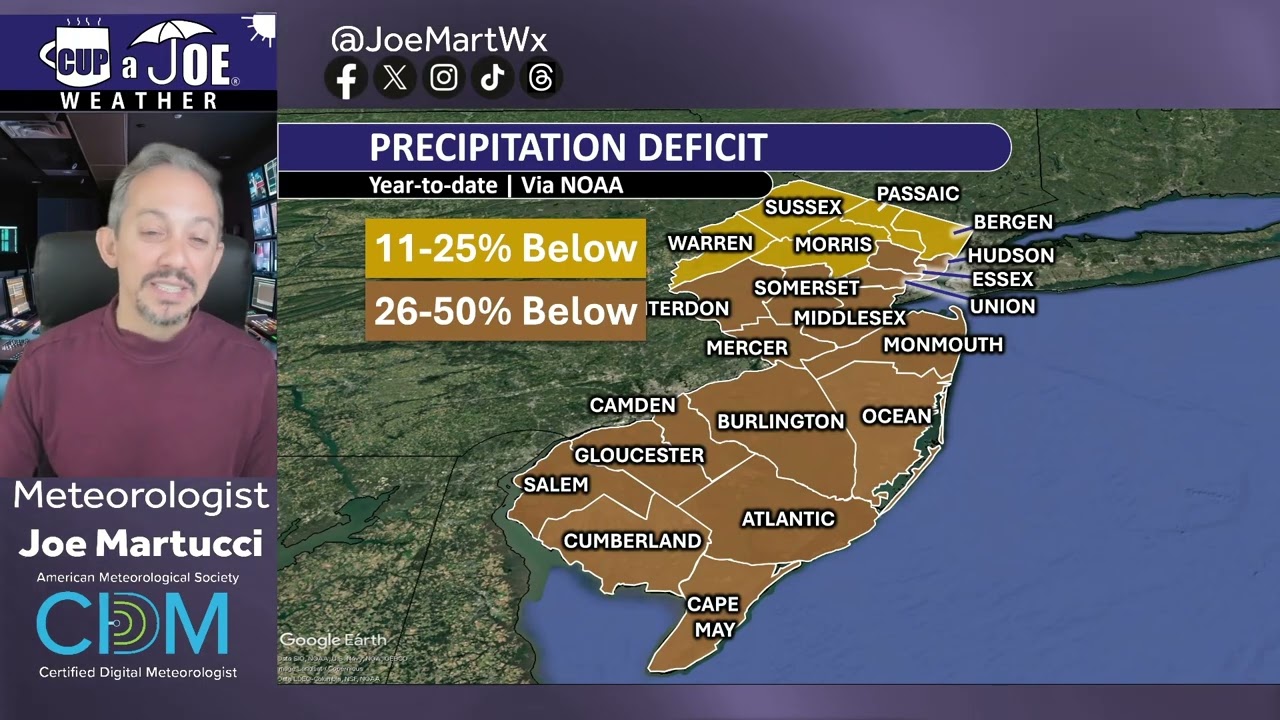
SATURDAY’S FORECAST | The only good thing about the weather this weekend is that our drought weakens. Otherwise, yeah, it’s an inside Memorial Day Weekend. 50s, rain, wind, the whole thing. At least Memorial Day will dry out a bit.
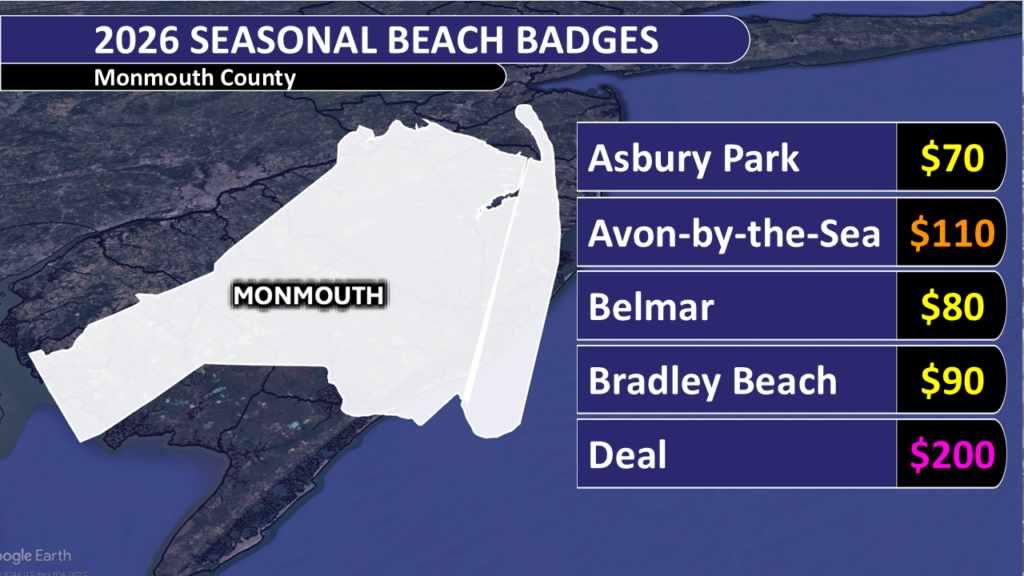
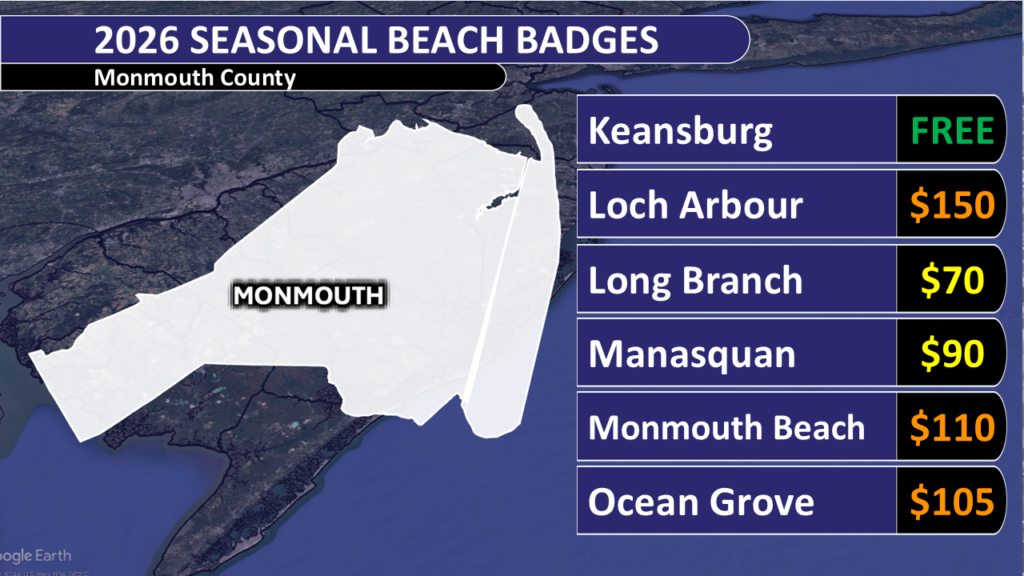
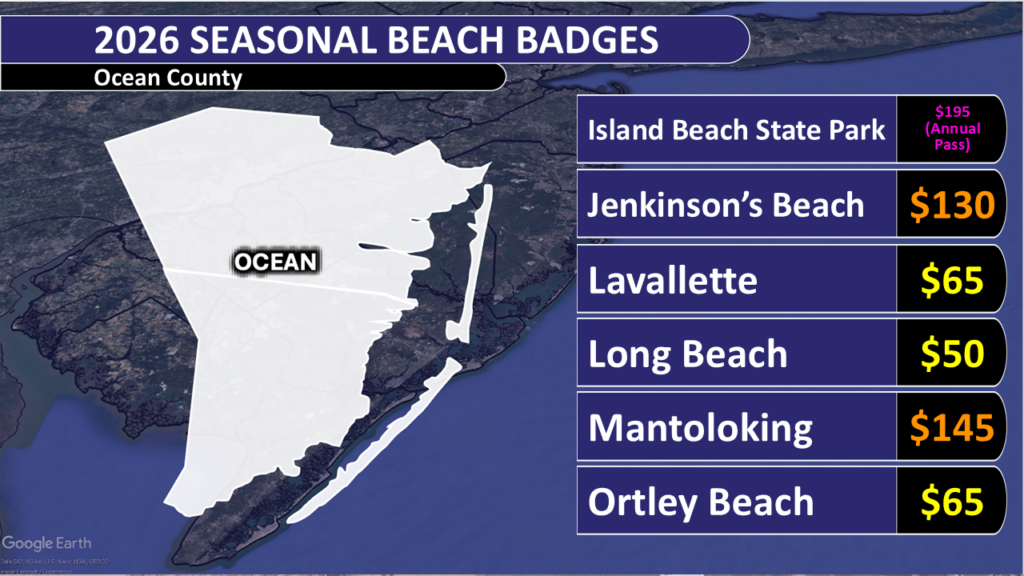
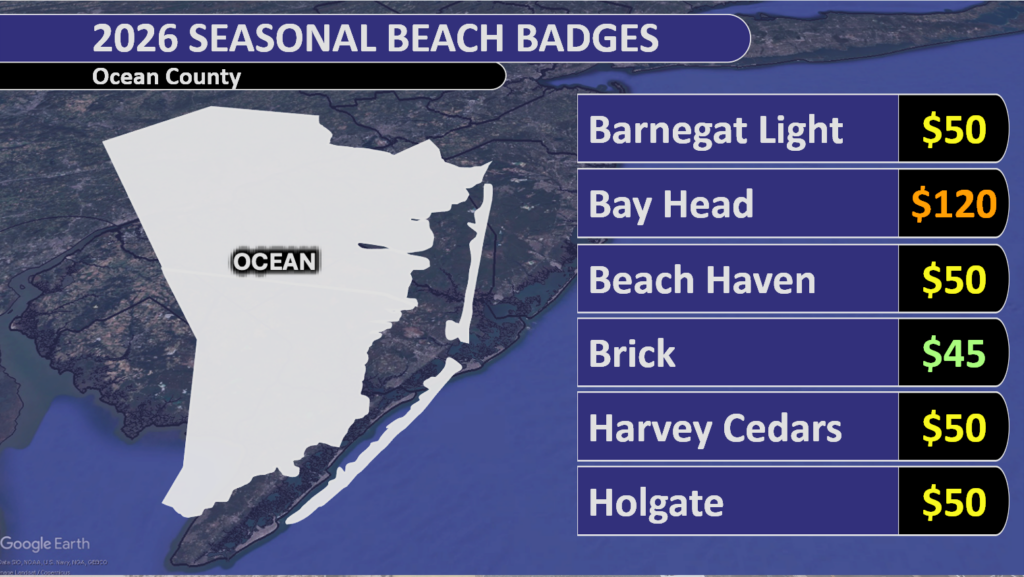
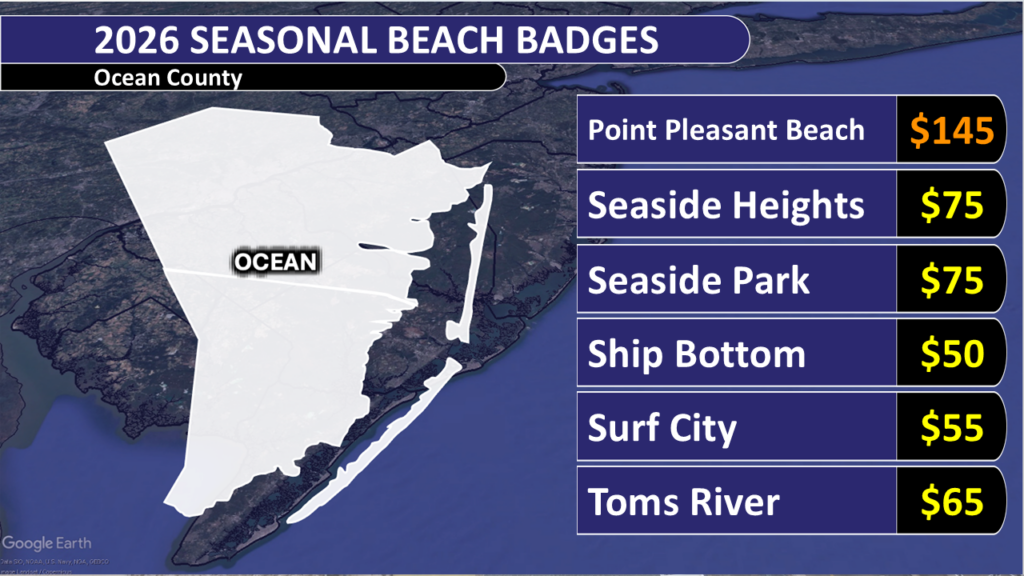
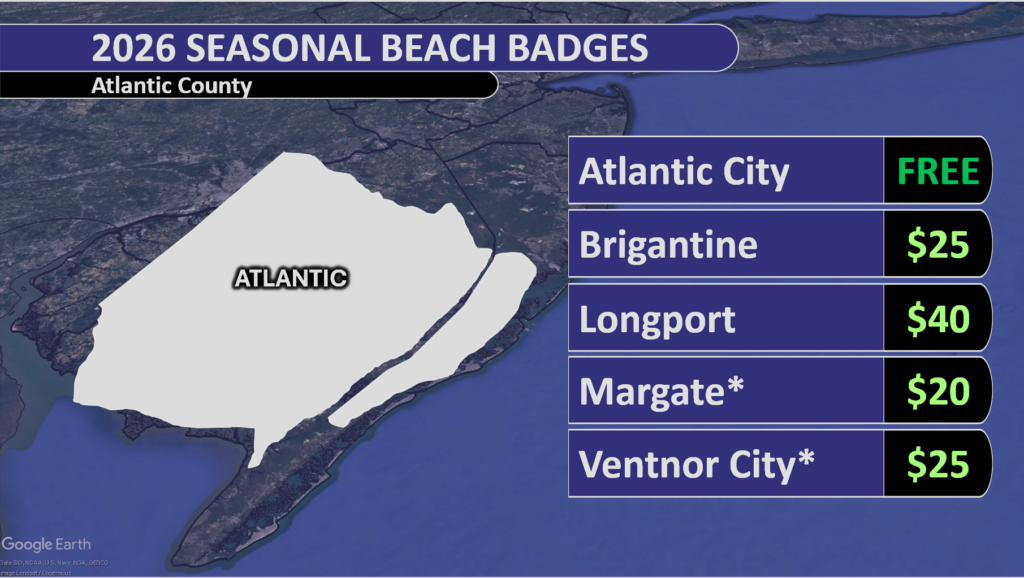
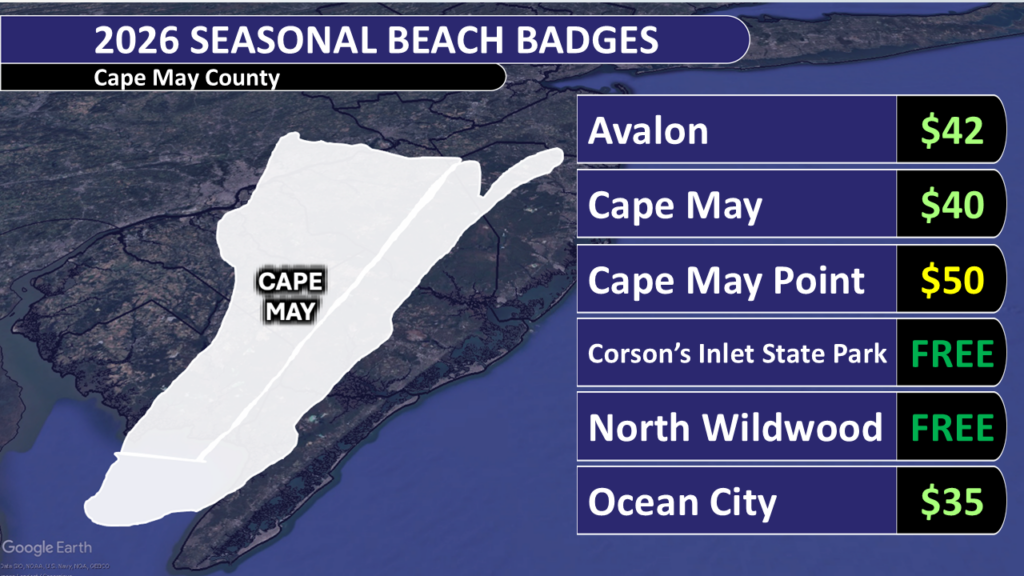
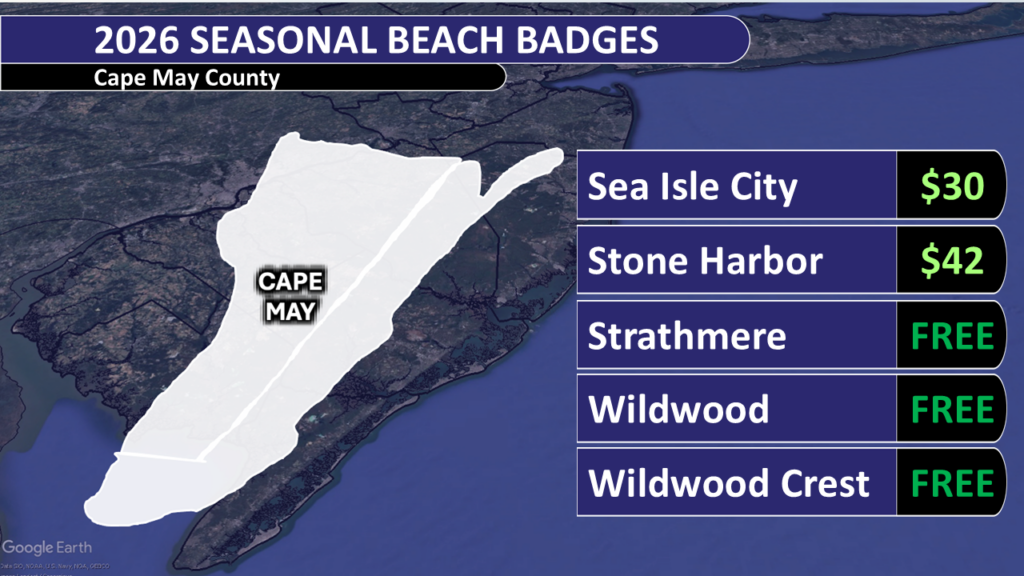
Out of the 45 towns we looked at, nine are either free or charge under $10 a day. Meanwhile, six now cost $15 for to enjoy on their sand. We go through all the beach badge prices again and like last year, the further south you go, the cheaper it gets, generally.
Remember, Atlantic City, Strathmere, the Wildwoods and most of the bay beaches are all free! Let’s go through the list.
Note that these prices are for general admission for adults. Many towns offer cheaper or free beach badges for kids under 12, active military, veterans and seniors.
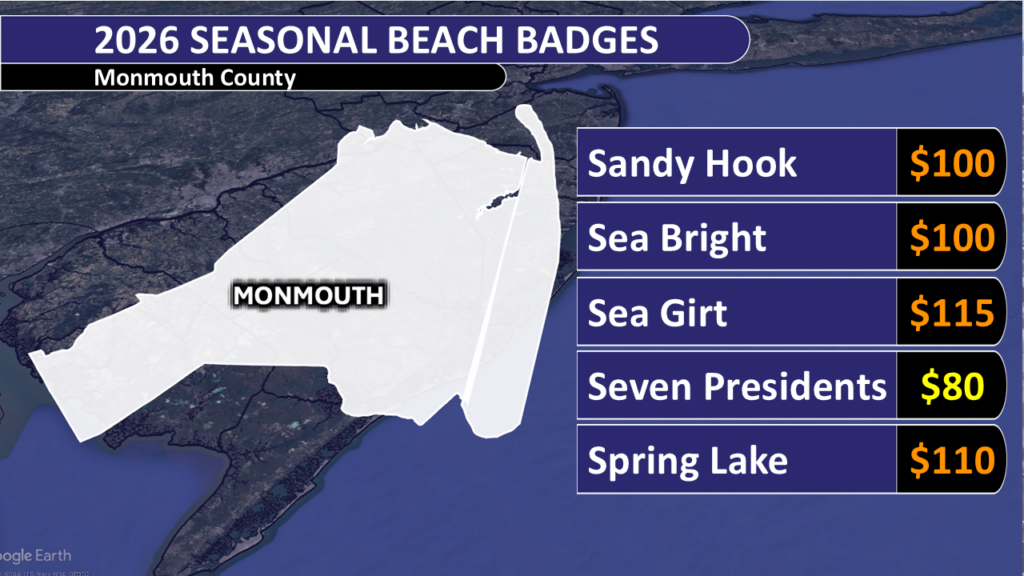
Monmouth County
Monmouth County has the highest seasonal beach badge costs to get on the sand. This includes the wealthy enclave of Deal which, at $200, is the most expensive seasonal beach badge for a town at the Jersey Shore.
Ocean County
The biggest county at the Jersey Shore (by area) has the biggest range in seasonal beach badge prices. Many Long Beach Island towns charge $50 for the season, making it quickly worthwhile to buy a seasonal badge vs. daily. Meanwhile, Mantoloking would require a lot of time in town to make up for the $145 seasonal charge.
Pt. Pleasant Beach is an interesting situation. Most of the town’s beach is operated by Jenkinson’s Boardwalk, at $130 for the season. The areas in town that are operated by the municipality, like Bradshaw’s beach and Maryland Avenue beach, are $145 for the season.
Atlantic County (Updated for Longport and Ventnor on 5/23)
The South vs. Central (yes, Central Jersey exists, and it includes Long Beach Island during the summer) divide is very real. Once you transition south of the Mullica River, beach badge prices for the season go way down.
Even Longport, at $70 for the season, would be a mid-tier Ocean County price and tied for the lowest in Monmouth County! The Atlantic City beach is always free, too.
Margate and Longport only sell seasonal badges. Still, the $20 in Margate isn’t too far off from some daily badge prices in Monmouth and northern Ocean counties.
Cape May County
Cape May County is home to the most free beaches on the ocean! The Wildwoods, Strathmere and Corson’s Inlet State Park all do not charge for access to the sand.
Even if you take away the free beaches, the rest of the towns have the lowest average cost of buying a seasonal pass. If you want the best bang for your buck, Cape May County is it.
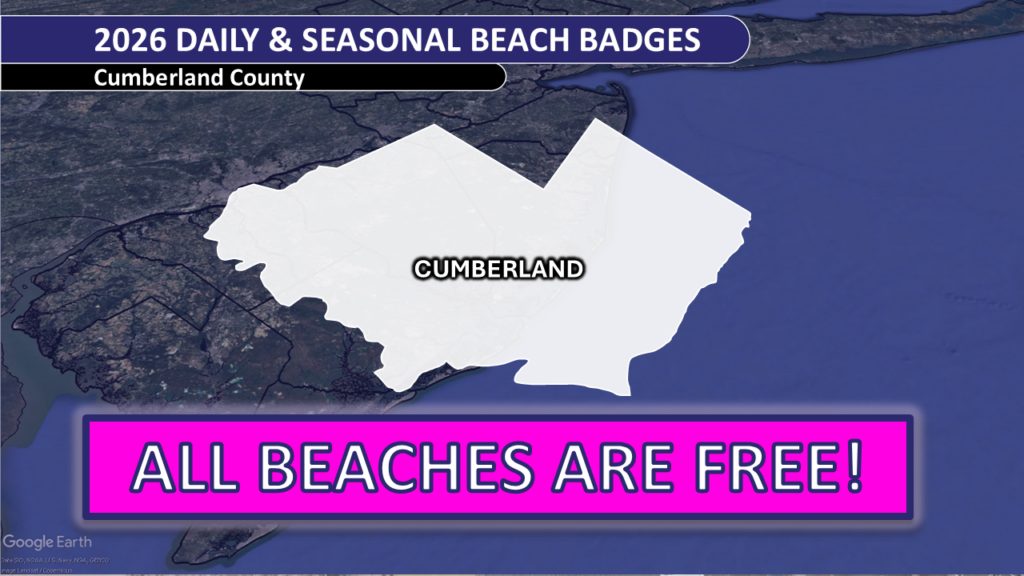
Cumberland County
The Jersey Shore doesn’t end when the ocean does! The Delaware Bayshore offers FREE, quiet, small beaches. The waves are gentle. Just don’t expect any lifeguards or concessions stands here.
Fortescue offers the most populated beach town with a few restaurants, a marina and a few service. Thompsons Beach, Moores Beach and Sea Breeze may not even offer a bathroom.
The greenhead flies will be an issue during the summer many days, though. Keep that in mind.
FRIDAY’S FORECAST | You know what they say… Labor Day Weekend we shine, 4th of July we sweat and Memorial Day Weekend? We shiver. 50s and 60s for this weekend. However, I promise, it is NOT a full washout all weekend long.