SAT. EVENING UPDATE | Two clusters of strong storms will rumble into NJ this evening. I do believe it weakens as it hits the Jersey Shore but lightning plus damaging winds are threats! Here’s what to know.
Never worry about missing severe weather warnings again. Get a call from me, text, or email when your location is impacted. WeatherCall ensures you stay informed for just $15 a year. Sign up: https://ngorder.wxriskalerts.com/db_app2.php?station=cajx
SATURDAY’S FORECAST | It’ll be hot inland, with highs around 90F all weekend long. But it won’t be humid! The shore will be the place to beat the heat, but it will be buggy on the beach.
Severe weather is not ruled out for a few hours this weekend. I’ll tell you where.
Come visit Headley Family Farm at 120 Province Road in West Creek! It’s where farming the pines meets the Jersey Shore. Get your Jersey Fresh produce here. Open weekends and some weekdays. Call us at 609-848-3763 or follow us on Facebook, too!
SATURDAY’S FORECAST | It is MUCH drier this weekend than last weekend. Not a drop of rain in sight! However, there is the high risk for wildfires today. Otherwise, enjoy the sunshine! A coastal storm is possible next week.
FRIDAY’S FORECAST | It’s not just refreshing, it’s crisp out! Dew points took a big tumble overnight. That sets us up for plenty of sunshine not just today but into the weekend as well. MDW do over? Lol.
A series of hard freezes hit farms and bogs hard in New Jersey and beyond during late April, causing an estimated $300 million in crop losses, with crop damage exceeding 30% in many parts of the state.
On May 20, Gov. Mikie Sherrill declared a state of emergency for all 21 counties in the state. She also sent a letter to U.S. Secretary of Agriculture Brooke Rollins to unlock federal funding relief for New Jersey farms.
“This freeze was unlike anything our growers have experienced in decades, and the damage is staggering,” said Sen. Cory Booker. “An entire season of peaches, apples and grapes were almost entirely decimated in a matter of hours. Many other fruits are also suffering significant losses. New Jersey farmers urgently need federal support to recover from this disaster.”
Maybe you know of a farmer who had losses. After all, there were over 600 farms between Cape May and Atlantic counties in 2022, according to the U.S. Department of Agriculture. That’s over 38,000 acres responsible for $167 million in products sold. Tourism, agriculture and fishing are the top three economic engines at the South Jersey shore. All are dependent on weather.
Freezes in late April are common for inland New Jersey. The average last freeze of spring at Hammonton is April 18, according to the National Oceanic and Atmospheric Administration. Atlantic City International Airport’s is April 19. In the deeper Pinelands, the last freeze on average is near the end of the month.
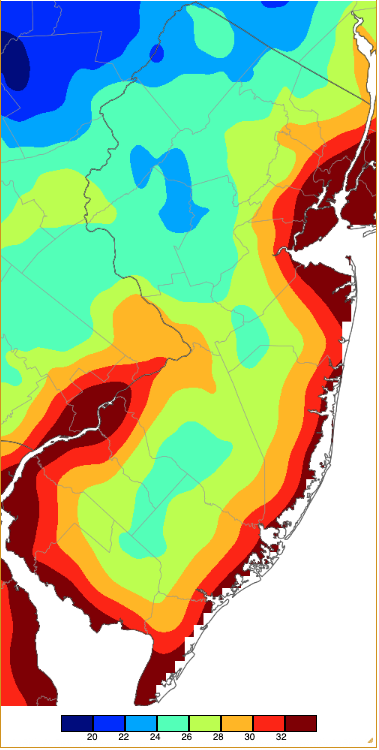
But what happened on April 21 was not normal for two reasons and may be more of a sign of things to come. First is just the sheer cold of that morning. Not only were inland low temperatures for the coastal counties below freezing, but they were at or below 28 degrees in spots. That’s considered a hard freeze which destroys most seasonal vegetation, especially the young, tender crops that were just starting to grow.
“Suffice it to say that this is one of the most widespread disasters on record to strike almost every fruit-growing tree, bush, or vine in the state. The horticultural industry also appears to have taken a notable hit,” said Dave Robinson, the New Jersey state climatologist, in his monthly report for April.
It wasn’t just the cold temperatures that made the agricultural loss devastating, prompting the state of emergency. It was the weather that led up to it.
It was warm. Really, it was hot. Temperatures sizzled between 85 and 95 degrees between April 14 and April 17, according to NOAA. Overnight lows stayed in the 50s and 60s.
That kind of warmth drove crops and plants to open and grow faster than usual for that time of the year.
When the freeze came on April 21, the plants were left exposed and many were killed. This will surely be a top 10 weather event for the year.
The executive order issued by Gov. Sherrill provides for increased coordination between state agencies to help farmers with what they may need. State Police Superintendent Jeanne Hengemuhle will lead the effort.
Federal crop insurance which, like the National Flood Insurance Program many of us are aware of at the shore, is backed by the Federal Government to protect against losses that many private insurers won’t take on. The problem is it has a cap of $325,000. For large farms, that’s just a percentage of what they could have lost.
While frosts and freezes during the growing season are fairly common, most are minor issues for farmers. The last significant one was in 2012. That year, a hard freeze hit on April 28, about a dozen days after a stretch of warm weather with lows in the 50s and highs in the 80s.
This year’s killing freeze arrived much sooner after the warm weather ended than it did in 2012 – and it was also a bit colder.
In our climate-changing world, sharp, hard freezes after days of plant-growing heat are expected.
The date of the last freeze of the year hasn’t changed much over the decades. In fact, at Atlantic City International Airport, the average last freeze is three days later now (April 18) than the average was in the 1970s (April 15-16). In Hammonton, it’s been roughly the same – around April 15.
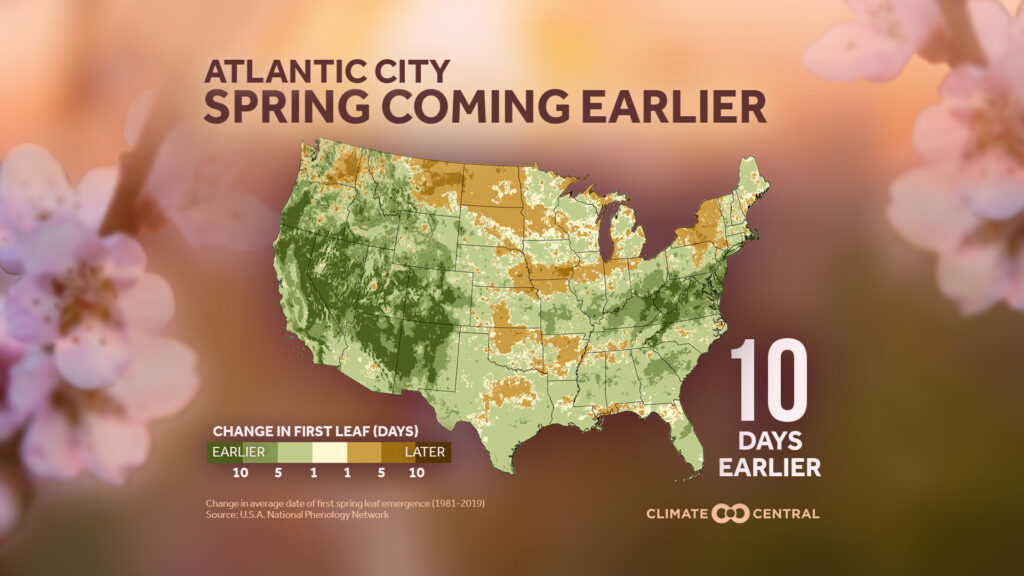
However, hot days are occurring earlier. Three days or longer of high temperatures of at least 80 degrees in April has about a 20% chance of occurrence in the 2020s. In the 1970s, it was about 5%. The result is more growth in our fruits, vegetables and crops before a killing freeze.
The last freeze is barely changing because the ingredients for a cold spring night aren’t as influenced by a changing climate. It requires a clear sky, light wind and low dew points.
Meanwhile, warmer spring days are driven by the greenhouse effect. The more greenhouse gases in the air, the more solar radiation from the sun is trapped near the surface, where we live.
Finally, not to rub salt in the wound with this article, but I gave Memorial Day Weekend a “D” in the Shore Summer Weekend Weather Report Card. The first weekend of our eighth edition earned the barely passing grade, mainly because of Monday. Temperatures finally got out of the 50s at the beach and it wasn’t an all-day washout. Better luck this weekend.
An omega block will set up over the United States and Canada Friday to Monday. Under the omega block in places like Minnesota and Wisconsin will be sizzling late Spring heat. Meanwhile, those in Denver or eastern New England will be cloudy, cool and stormy. NJ will be on the edge, which brings the best of both worlds for outdoor events this weekend.
Why settle for big chains? Choose Just4Wheels’ family-owned locations all across NJ! Rent brand-new sedans, passenger vans, box trucks and more today! Visit www.just4wheels.com or call 877-650-3500.
A “fire rainbow” glistened in the daytime sky Tuesday in New Jersey.
A circumhoriztonal arc, or “fire rainbow”, happens when the white sunlight from the sun is directed toward high clouds. High clouds are made up of ice crystals, which act as a prism, bending the sunlight into the colors you see here.
While these atmospheric optics bring colorful displays, they aren’t to be confused with your standard rainbow you may get to see following an afternoon thunderstorm.
This circumhorizontal arc is more commonly seen when the sun is higher in the sky during the summer months in the midlatitudes, like New Jersey is.
WEDNESDAY’S FORECAST | Good morning! We’re in for a few showers and even thunderstorms today but keep your after school activities or beach plans, especially if you’re north of the AC Expressway. Drier weather comes later this week. Then, an “omega block” sets up.
Jolt your brand with the Shore’s top weather media company. Advertise today! joe@cupajoe.live
TUESDAY’S FORECAST | Well after our worst Memorial Day Weekend weather in years, it’s a much brighter week ahead!
Tired of water in your basement or crawlspace? Trust Finally Dry Waterproofing’s family-owned company to fix it right. We install permanent drainage solutions guaranteed for 2 ownerships with no limit! Get your FREE inspection at finallydrywaterproofing.net.
SATURDAY’S FORECAST | The only good thing about the weather this weekend is that our drought weakens. Otherwise, yeah, it’s an inside Memorial Day Weekend. 50s, rain, wind, the whole thing. At least Memorial Day will dry out a bit.